Sunday, 13 March 2022

Junior’s is a men’s made-to-measure clothier providing service by appointment in the Philadelphia area.


https://www.shopjuniors.com/pages/stay-in-touch


Junior’s is a men’s made-to-measure clothier providing service by appointment in the Philadelphia area. Our foundations are classic American style with influences from Great Britain and Italy. Above all else, we are proponents of a proper and comfortable fit to ensure long lasting garments for building a wardrobe.


Started in February 2020 by Glenn Au, Junior’s is the culmination of 8 years experience in the men’s clothing industry. With stops along the way including O’Connell’s in Glenn’s hometown of Buffalo, New York and most recently at H. Stockton in Atlanta, Georgia, Glenn has learned from the best haberdasheries in the country. Paired with his passionate styling knowledge is Glenn’s focus on building relationships with his clients to intimately learn their preferences to assist them in creating a closet where every item of clothing is worn well.


MADE-TO-MEASURE SHIRTS

While there are plenty of shirt options in the world, our American made, Made-to-Measure shirts have hundreds of choices for cloth, styling and personalization. But, with our help, we can make your ideal shirt that can be reproduced time and time again. We offer dozens of shirt styles ranging from formal shirts for black tie, dress shirts in fine Italian cotton for the workweek to casual sport shirts in linen or flannel for a specific season.


Based off of a simple, yet precise, 12 step measurement process we can create a custom fit shirt to replicate for years to come. Additionally, with close to 100 different collar styles and countless additional styling options we can easily make the shirts you are looking for from basic button-down or spread collars to pop-overs, club collars, french cuff and western style shirts.


Your Junior's Made-to-Measure shirts arrive in 4 weeks and are ready to wear. After the first few launderings of your shirts, we will be able to note any future adjustments and keep it in your personal file. One of the most enjoyable aspects of the made-to-measure shirt process is picking shirts for your next order and having the peace of mind knowing they will fit just as your other Junior’s Made-to-Measure shirts do.


Pricing for MTM shirts start at $175. Prices vary based on cloth selection and garment personalization.

Thursday, 3 March 2022

VICTOR BESNARD / LA HAYE


The bespoke tailoring house A. Besnard Tailleur was established in 1876 by Albert Besnard. In 2018, his great-great-grandson Victor Besnard revived the label with a new focus on ready-to-wear clothing.


The Story of the OCBD Shirt

Words by Victor Besnard

https://besnard.co/blogs/journal/the-oxford-cloth-button-down-shirt


From a polo match in England in the 19th century to the wardrobe of Ivy League students in the 50s; A little history of the oxford cloth button down shirt.


It has been said that the oxford cloth button down shirt (or the O.C.B.D., as connoisseurs like to call it) is the most essential garment in a man’s wardrobe. Its understated elegance has been elevating the way men dress for over a century. Embraced by Ivy League students in the 1950s as their uniform and adored by style icons such as Steve McQueen, Paul Newman and Gianni Agnelli; the button-down shirt is without a doubt an iconic piece of menswear.


The history of the OCBD

The story goes that an American named John E Brooks (of Brooks Brothers) attended a polo match during one of his visits to England. While watching the match, he noticed something peculiar about the polo players outfits. Their collars were fastened to their shirts with buttons, apparently to avoid distraction from the collar points flapping around during the match.


A team of polo players


Intrigued with his discovery John E Brooks brought one of the polo players’ shirts back to America to have it replicated. It wasn’t much later when in 1896 the first “polo collar” shirt was introduced to the American market.


From Ivy League to Hollywood

Fast forward a couple decades to the 1950s, when the Ivy League students adopted the OCBD and made it part of their uniform. The college campuses were full of students wearing tweed jackets, oxford cloth button-down shirts, regimental ties, flannel trousers and penny loafers.


This casual but decadent style worn by the east coast elite did not remain unnoticed by the west coast. Famous actors such as Steve McQueen, Paul Newman and Robert Redford embraced this new way of dressing on and off screen and elevated it to the height of cool. It became the style of the new American generation and the popularity of the button-shirt really took off.


Steve McQueen


Gianni Agnelli


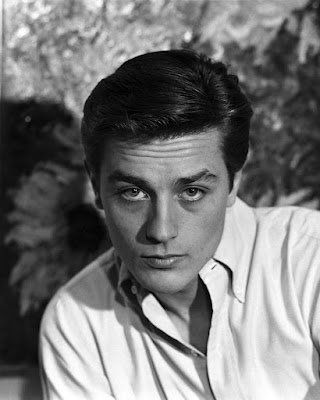
John F. Kennedy continued wearing the shirt in the oval office long after finishing his studies at Harvard. Miles Davis sported a green OCBD on the cover of his album Milestones. And the admiration of the shirt also stretched overseas. Alain Delon wore the shirt in 1960 as his portrayal of Tom Ripley in Purple Noon. And it was the favourite shirt of head of Italian car giant Fiat Gianni Agnelli, who is widely regarded as one of the best dressed men of the 20th century.


The collar roll

There is something fascinating about the roll of a (proper) button-down collar. This elegant arch is probably the most sought-after detail by menswear enthusiasts. Over the years, trends and shirt making techniques changed and this crucial little detail became harder to find (almost disappeared).


Alain Delon


So what makes the collar roll? It’s a combination of several things. First, the length of the collar points is crucial since it should be long enough to form an arch. Around 3½ inch (or 9cm) is enough to achieve a proper roll. Secondly, the collar buttons should be positioned slightly higher than usual, so that the long collar points are forced to form an arch. Finally, the collar shouldn’t be too stiff, so the interlining should be soft. As a matter of fact, the first oxford cloth button down shirts had no interlining at all.


The oxford cloth

The history of the oxford cloth can be traced back to the beginning of the 19th century in Scotland. Scotland was an important player in the textile industry and local mills were experimenting with new types of weaves. One mill launched four types of cloths named after prestigious universities; Yale, Harvard, Cambridge and Oxford. The latter became one of the most popular fabrics for casual shirts.


The revolutionising aspect of the oxford cloth was its specific basket-weave pattern. You may have read about weaves in our introduction to shirt fabric, but it is essentially the way in which the threads of cotton (called warp and weft) are put together to make a fabric. Oxford cloth is made up of multiple weft threads crossing over an equal number of warp threads. The threads are usually of a single colour crossed with a white to give oxford its unique, checkerboard appearance.


The details

The style of a shirt is determined by more than just the collar and the cloth.


Many characteristics such as cuffs, front and back shape its appearance. As a casual shirt, the OCBD has single cuffs, often a one button barrel or mitered cuff. The traditional version has a placket front and a box pleat in the middle of the back for extra movement. And finally, a chest pocket is an integral part of the OCBD shirt. It fits the casual nature of the shirt perfectly and comes in handy during the summer for sunglasses.


Miles Davis


Oxford cloth comes in many colours but if you’re starting to build your shirt wardrobe, we recommend starting with white, light blue and a university stripe. These are solid options to wear on a pair of jeans but also work well with tailoring.


About

The bespoke tailoring house A. Besnard Tailleur was established in 1876 by Albert Besnard. In 2018, his great-great-grandson Victor Besnard revived the label with a new focus on ready-to-wear clothing.


Our aim is to bring the elegance and quality found in tailoring to ready-to-wear. We aspire to create menswear that is worn with pleasure and will be passed down from generation to generation.


With our collection of versatile and complementary pieces, we search for the right balance between traditional style and modern wearability. We believe that menswear should be classic, understated and timeless.


A passion for design, materials and craftsmanship is what drives us here at Besnard. Together with a small number of partners, we develop products that are beautifully designed and made to last.


We work with small family-run workshops, most of which are located in Italy. With decades of experience, they are true specialists in their craft.


We believe in building sustainable and equal relationships with our suppliers. We admire their work, regularly visit them and we consider them our true partners.

Tuesday, 1 March 2022

Video of St George's Hill Weybridge Surrey | What's it like to live in Weybridge?


St.George’s Hill, near Weybridge

St George’s Hill, near Weybridge, has been called Britain’s Beverly Hills. At least a quarter of its houses are owned by people from former Soviet states. Photograph: Martin Godwin/The Guardian

Tensions rise at the £3bn Surrey estate Russian oligarchs call home


The secretive owners of mansions at St George’s Hill will be nervous about making an appearance on Liz Truss’s hitlist


Rupert Neate

Rupert Neate Wealth correspondent

@RupertNeate

Mon 28 Feb 2022 07.00 GMT

https://www.theguardian.com/world/2022/feb/28/tensions-rise-at-the-3bn-surrey-estate-russian-oligarchs-call-home


The warning to rich Russians linked to Putin that the UK government “will come after you” and ensure oligarchs have “nowhere to hide” is likely to hit hard at the gated luxury housing estate in Surrey dubbed “Britain’s Beverly Hills”.


Russians and those from former Soviet states own more than a quarter of the 430 luxurious homes in St George’s Hill, a heavily guarded 964-acre estate near Weybridge, Surrey, where mansions have changed hands for more than £20m each.


Liz Truss, the foreign secretary, said on Sunday that the government was drawing up a “hitlist” of oligarchs with links to Putin who will be added to the sanctions list in coming days and weeks.


“We have to make it deeply painful for the oligarchs that support the Putin regime. There are over a hundred Russian billionaires,” she told the Sunday Times. “Nothing is off the table in terms of who or what we are targeting. We are very clear about that – we are very prepared to do what it takes.”


Brad, one of six fluorescent jacket-wearing security guards who prevented the Guardian from entering St George’s Hill, said there were more Russians living on the estate now than at any time in his six years working at the gate.


“I imagine they are getting a bit nervous now about what Boris [Johnson] might do now that Putin has invaded Ukraine,” he said. “But, there’s one thing I can tell you for sure, they won’t want to talk to you and we are calling the police unless you leave now.”


Brad was right. None of the drivers of cars leaving the estate, including the chauffeur of a white Bentley, would speak about the potential sanctions threat.


However, a few minutes’ walk away at a council estate that backs on the estate it was hard to stop Joy, a 75-year-old retired furniture saleswoman, from speaking her mind about “all those bloody dodgy Russians next door”.


“I think they should all be turfed out of the country,” she said. “Why should they be allowed to live here when there is a war going on over there. The only way to stop Putin is to put pressure on Russians.


“The rich Russians who live in the huge houses over there,” Joy said, pointing at the fence that separates the communal garden of her council estate from the St George’s Hill golf course in the estate, “the government should seize their houses.”


Johnson has so far announced sanctions on more than 100 Russian companies and eight individuals in what he described as “the largest and most severe package of economic sanctions that Russia has ever seen”.


“We will continue on a remorseless mission to squeeze Russia from the global economy piece by piece, day by day and week by week,” he added.


St George’s Hill is home to a greater concentration of rich Russians than Belgravia’s Eaton Square – nicknamed Red Square by some locals – where Roman Abramovich and Oleg Deripaska have had homes, and Highgate in north London, where several huge mansions are owned by oligarchs including Witanhurst, the UK’s second largest house after Buckingham Palace.


Built by developer Walter George Tarrant in the 1910s and 1920s, the St George’s Hill estate was originally popular with British business people and celebrities including John Lennon, Ringo Starr, Tom Jones, Kate Winslet, Elton John and Cliff Richard.


An increasing number of Russians began to move in during the 2000s after the introduction of the so-called “golden visa” scheme allowed wealthy people to enter the UK if they invested at least £2m and Chelsea’s billionaire owner, Roman Abramovich, moved the club’s training ground to nearby Cobham. The government axed the visa scheme earlier this month amid concerns about applicants having acquired their wealth illegally.


House prices on the estate rose by more than a fifth last year, according to luxury estate agent Savills, taking the total value of the homes on the estate to more than £3bn. There is no suggestion that people named on the sanction list live on the estate.


A UK diplomatic source said the people to be subjected to forthcoming sanctions were “people who have international lifestyles”.


“They come to Harrods to shop, they stay in our best hotels when they like, they send their children to our best public schools, and that is what’s being stopped,” the diplomat said. “So that these people are essentially persona non grata in every major western European capital in the world. That really bites.”


Johnson has also ordered the creation of a new dedicated “Kleptocracy Cell” within the National Crime Agency to “target sanctions evasion and corrupt Russian assets hidden in the UK and that means oligarchs in London who have nowhere to hide”.


Margaret Hodge, a Labour MP and chair of the all-party parliamentary group on anti-corruption, said the measures do not go far enough and meant people “who have stolen from the Russian people and support Putin would not be caught”.


“Russians don’t come here for the weather, but instead for our lax regulation, pathetic law enforcement and a property market that is ripe for abuse,” she said.


Hodge called on the government to target sanctions at the 35 “kleptocrats” that Russian opposition leader Alexei Navalny claims support Putin’s regime. The Navalny list includes Abramovich and Alisher Usmanov, who previously owned a 15% stake in Arsenal FC. Only two people on the Navalny list: Gennady Timchenko, a Russian investor and Putin ally, and Denis Bortnikov, deputy president of the Russian state-owned VTB bank, were subjected to government sanctions last week.


Over the weekend, Abramovich passed “stewardship” of Chelsea FC, which he bought in 2003, to the club’s charitable foundation after a call in parliament for him to be sanctioned after the invasion of Ukraine. Labour MP Chris Bryant said the Home Office had identified Abramovich as having links to the Russian state as well as to “corrupt activity and practices” and suggested the UK should seize his assets.


Transparency International estimated that Russians accused of corruption or with links to the Kremlin have bought about £1.5bn of UK property since 2016.


Security at St George’s Hill, which includes automatic number plate recognition technology, was heavily tightened after a Russian millionaire resident was found dead on a street near his home in November 2012.


Alexander Perepilichnyy, a whistleblower who helped expose a multimillion-pound fraud in Russia, was found by a coroner to have died of natural causes – sudden arrhythmic death syndrome – while jogging. The coroner said he could not “completely eliminate all possibility” that Perepilichnyy was the victim of foul play but “there is no direct evidence that he was killed or any compelling circumstantial evidence either”.


Witanhurst in Highgate, London, owned by Russian tycoon Andrei Guriev. Photograph: Suzanne Plunkett/Bloomberg


Mega-rich homes tour puts spotlight on London's oligarchs

This article is more than 6 years old

Campaigners connected to Russian opposition leader Alexei Navalny offer tour of billionaires’ exclusive homes, including those of Vladimir Putin’s friends


Luke Harding

Thu 4 Feb 2016 20.53 GMT

https://www.theguardian.com/uk-news/2016/feb/04/mega-rich-homes-tour-london-oligarchs-russia-alexei-navalny-putin


It is London’s biggest non-royal private home, a palace in Highgate with 28 bedrooms, a 40,000-sq-ft basement and designer orangery. On Thursday the huge mansion, Witanhurst, was on the list of several destinations for what was billed by political campaigners as London’s first ever “kleptocracy” tour.


Campaigners connected to Russia’s opposition leader Alexei Navalny – a lawyer and critic of corruption – hired a bus and gave a guided tour of houses and flats in London’s most exclusive districts, properties owned by Russian government ministers and wealthy friends of Russia’s president, Vladimir Putin.


“It’s a refuge, a showroom and deposit box,” Roman Borisovich said of Witanhurst, standing near its massive red-brick wall. The palace was purchased in 2008 for £50m, but the owner was for some time a mystery. Last year the New Yorker magazine revealed that the mansion belonged to Andrei Guriev, a Russian tycoon and fertiliser baron who until recently had served in Putin’s senate.


People outside coach in street

The tour included properties owned by Russian government ministers and wealthy friends of the country’s president, Vladimir Putin. Photograph: Graeme Robertson/The Guardian

Borisovich is an anti-corruption activist who appeared in the Channel 4 documentary From Russia With Cash. Posing as a Russian official who had stolen his country’s health budget, he exposed the antics of unscrupulous estate agents. He said his latest idea aims to draw attention to how dirty money from countries such as Russia, Ukraine and Kazakhstan, continues to pour into the west.


Borisovich said he also wanted to highlight how a group of “enablers”, such as lawyers, accountants, and bankers, were helping oligarchs launder their “ill-gotten gains” by investing the cash in prime London mansions.


In central London offshore companies owned one in 10 of the houses, he said, and shell companies owned £122bn worth of property.


As well as Witanhurst, the tour members visited Eden House, a pleasant villa in Highgate. A silver Mercedes was parked in the driveway, near a tasteful statue of a boy. The house, they were told, belonged to Andrei Yakunin.


Yakunin’s father, Vladimir, was reportedly close to Putin and until 2015 had run the company Russian Railways. A former KGB officer, Yakunin Sr had sponsored anti-western Russian thinktanks. Yakunin’s neighbour, Andrew, popped out and said he had invited the Russian and his wife round for drinks when they moved in a couple of years ago. “Funnily enough, they didn’t invite us back,” he said.


He said the Yakunins had installed hi-tech security cameras. They bought the house for £4.5m in 2007 via a Panamanian company. “One day I was clipping the hedge next to their property. Suddenly I heard a voice from the security camera telling me ‘Keep clear! Leave the premises!’”


Were Russian millions a bad thing for London? “Well, I made my money as an engineer and a lawyer,” he said.


Thursday’s London tour had begun just down the road from the Houses of Parliament, on Victoria embankment. Borisovich posed with a lifesize cardboard cut-out of Russia’s deputy prime minister, Igor Shuvalov. As well as being one of the top figures in the Russian government Shuvalov and his wife, Olga, owned two luxury apartments worth £11.4m overlooking the Thames. The homes cost 100 times Shuvalov’s official salary.


“It’s in Britain’s interests to stop this flow of corrupt money,” said Vladmir Ashurkov, a Russian opposition politician, who has received political asylum in the UK. Ashurkov said he rejected the argument that foreign money helped the economy. Rather, he said, it raised house prices to unaffordable levels and turned London into a global centre for money laundering.


The apartments at One Hyde Park, London, are among the world's most expensive, with prices ranging from £6.5m to £140m


The tour bus trundled past Belgrave Square, in Kensington, known jokingly as Red Square because of its association with other high-profile Russians.


The metals tycoon Oleg Deripaska owned No 5; the former oligarch Boris Berezovsky, who died in 2013, had several flats at No 26. Roman Abramovich’s home, two adjacent townhouses in Chester Square, was a short stroll away.


The smallest house on the tour belonged to Roman Rotenberg; situated in Cadogan Lane, Belgravia, it cost a mere £3.3m. Rotenberg’s father and uncle, Arkady and Boris Rotenberg, were said to be Putin’s oldest friends and former judo partners. Since Putin became president in 2000, the pair had become billionaires, supplying pipelines to the state-controlled energy corporation Gazprom. In 2014 the EU and US sanctioned both of the Rotenbergs in connection with the Crimea crisis.


Roman Rotenberg is a British citizen, and now the formal owner of many of his father’s companies. On Thursday he did not seem to be at home. There were no signs of life outside his mansion, with its handsome Dutch wooden shutters. “The US has sanctioned the Rotenbergs,” Borisovich said, standing in the cobbled road outside. He added: “Why doesn’t Britain do something?”


Saturday, 26 February 2022

Britain's oldest pub 'Ye Olde Fighting Cocks' closes as landlord blames Covid


St Albans: England's 'oldest pub' Ye Olde Fighting Cocks closes

Published5 February

https://www.bbc.com/news/uk-england-beds-bucks-herts-60270775


Ye Olde Fighting Cocks in St Albans has survived wars and plagues but the coronavirus pandemic brought new challenges

A pub reputed to be the oldest in England has closed after its licensee's firm went into administration.


Christo Tofalli, who runs Ye Olde Fighting Cocks in St Albans, Herts, said the move came after "challenging" trading conditions due to Covid-19.


He said he was "heartbroken" and had "tried everything" to keep open the pub, which dates back to AD793.


Mr Tofalli said the pub would reopen under new management but that he would "walk away".


He said the pub's owner Mitchells and Butlers (M&B) was now talking to the administrators of his company.


"We are all looking for the best way forward for the pub but it will reopen with new owners and I hope they will keep a bit of the soul and spirit going," he said.


M&B confirmed to the BBC that it had no plans to close the pub for good, but was talking to interested parties and planned to reopen the venue in Abbey Mill Lane at a future date.


It has survived wars, plagues and economic crises, but Mr Tofalli, who has run the pub for a decade, said the Covid-19 pandemic was "devastating" and, with tight profit margins, the business had "no safety net".


In a statement on Facebook, Mr Tofalli said that "after a sustained period of extremely challenging trading conditions, YOFC Ltd has gone into administration".


"Along with my team, I have tried everything to keep the pub going," he said.


"However, the past two years have been unprecedented for the hospitality industry, and have defeated all of us who have been trying our hardest to ensure this multi-award-winning pub could continue trading into the future.


"It goes without saying I am heartbroken: this pub has been so much more than just a business to me, and I feel honoured to have played even a small part in its history."


Mr Tofalli told the BBC that within hours of announcing the closure, he had been inundated with messages of support from both within the city and around the world.


"I've never seen anything like it," he said.


"With all the messages I have had, it speaks for itself what we achieved.


"To be reading about the impact we've had on people is mind-boggling and extremely humbling. We became an important part of the community... the family we created was huge.


"The time has come for me but we will make sure the handover is seamless and the synergy keeps going."


Ye Olde Fighting Cocks

Ye Olde Fighting Cocks is a public house in St Albans, Hertfordshire, England. It is one of several pubs that lay claim to being the oldest in England, claiming to have been in business since 793 AD.

The pub was once recognized as the oldest in England by the Guinness World Records, but this title was rested in 2000. The building is described by Historic England as being of 16th-century appearance, but as the earliest date for which it can be proved to have been licensed is 1756 – and even that date is not certain – its claim to this record is somewhat uncertain. Others such as the Ye Olde Man & Scythe in Bolton, Greater Manchester, and Ye Olde Trip to Jerusalem in Nottingham may have better claims. Even in St Albans, the White Hart and the Fleur de Lys (currently called 'The Snug') are believed to have been trading as inns in the late medieval period.


The pub is at the end of Abbey Mill Lane beside the River Ver, just outside the perimeter of Verulamium Park, not far from St Albans Cathedral in Hertfordshire.


Architecture

The main structure is free-standing and has an octagonal appearance, attributable to its original use as a pigeon house. It has been added to over the years but the original timber-framed structure is clearly visible. It was originally close to St Albans Cathedral (when it was St Albans Abbey) and was moved to the present site sometime after the dissolution of the Abbey in 1539. Its foundations are claimed to be even older, dating from around 793 but again this is dubious. It is claimed that there are tunnels running between the cathedral and the pub's beer cellars which were once used by monks.


As with many old buildings, the ceilings are quite low. An original bread-oven is next to one of the fireplaces. It has a large beer garden with different seating arrangements, as well as seats out the front.


History


The main structure of the building was built in the 11th century and was originally used as a pigeon house.


The building, in its current location, was originally known as The Round House[6] but there is no record of it being licensed as a public house under that name. The first known reference to it being an alehouse is in 1756 when it appears to be trading as The Three Pigeons. Around 1800 its name changed to the Fighting Cocks, perhaps in reference to the sport of cock fighting which was popular at the time and which may have taken place in the main bar area. The prefix "Ye olde..." is a late Victorian affectation. It is known by locals as 'The Fighters' or 'The Cocks'.


In 1950 the building was listed.


In 2015 PETA wrote to the pub's landlord and its owners, Mitchells & Butlers, requesting that they change the name due to its cockfighting association. The request was declined.


In February 2022, the pub went into administration.


The Cocks was featured in an exterior scene in "The Sins of the Fathers", a 1990 episode of the ITV series Inspector Morse. The setting was the beer garden along the River Ver, with the pub's large sign plainly visible in the background. It also features in the third series of Ricky Gervais' sitcom After Life.