Monday, 19 December 2022

Brilliant Sheep Herding Demonstration Using Border Collies / Brains, Brawn or Both: What Drove the Creation of Modern Dog Breeds?


Brains, Brawn or Both: What Drove the Creation of Modern Dog Breeds?


Genetic variants associated with brain development help distinguish breeds designed for different physical tasks, a new study reports.

Sheep herding breeds appear to have a high number of genetic variants associated with a neurodevelopmental process known as axon guidance, which ensures that neurons are wired together correctly.


By Emily Anthes

Dec. 8, 2022

https://www.nytimes.com/2022/12/08/science/dog-breed-genetics.html?action=click&module=card&pageType=theWeekenderLink


In creating modern dog breeds, humans sculpted canines into physical specimens perfectly suited for a wide variety of tasks. Bernese mountain dogs have solid, muscular bodies capable of pulling heavy loads, while greyhounds have lean, aerodynamic frames, ideal for chasing down deer. The compact Jack Russell terrier can easily shimmy into fox or badger dens.


Now, a large study, published in Cell on Thursday, suggests that behavior, not just appearance, has helped qualify these dogs for their jobs. Breeds that were created for similar roles — whether rounding up sheep or flushing birds into the air — tend to cluster into distinct genetic lineages, which can be characterized by different combinations of behavioral tendencies, the researchers found.


“Much of modern breeding has been focused predominantly on what dogs look like,” Evan MacLean, an expert on canine cognition at the University of Arizona who was not involved in the study, said in an email. But, he emphasized, “Long before we were breeding dogs for their appearances, we were breeding them for behavioral traits.”


The study also found that many of the genetic variants that set these lineages apart from each other appear to regulate brain development, and many seem to predate modern breeds. Together, the results suggest that people may have created today’s stunning assortment of breeds, in part, by harnessing and preserving desirable behavioral traits that already existed in ancient dogs, the researchers said.


“Dogs have fundamentally the same blueprint, but now you’ve got to emphasize certain things to get particular tasks done,” said Elaine Ostrander, a dog genomics expert at the National Human Genome Research Institute and the senior author of the study. “You’re going to tweak a gene up, you’re going to tweak it down.”


In an email, Bridgett vonHoldt, an evolutionary biologist at Princeton University who was not involved in the research, called the new paper “a major landmark in the field of dog genomics and behavior. We know it is complicated. This study not only gives us hope, it will be viewed as an inspiration for all in the field.”


Still, major questions remained, some scientists said, including whether humans deliberately set out to create breeds with specific behavioral tendencies. “We don’t have a ton of evidence for intentional selection,” said Elinor Karlsson, an expert in dog genomics at the University of Massachusetts Chan Medical School who was not involved in the research.


But she praised the study, noting that the findings were consistent with her own research, which also concluded that many of the genetic factors that shape the behaviors of modern dogs originated deep in canine history.


Researchers analyzed behavioral surveys completed by owners of more than 46,000 purebred dogs to match behavioral traits with lineages.Credit...Jonno Rattman for The New York Times


“They’re really taking advantage of this really complex history of the dog breeds, and these relatively subtle but real differences in behavior, to explore how genetics and genetic variation can actually shape these behavioral traits,” she said.


Behavioral breeding

The researchers studied the genomes of more than 4,000 canids, including samples from more than 200 different dog breeds, as well as mixed-breed dogs, semi-feral village dogs and wild canids, such as wolves and coyotes.


The scientists used computational tools to map out the genetic trajectories by which ancient dogs became, for instance, generic herding dogs and then distinct breeds, like Border collies.


They found that domestic dogs could be divided into 10 distinct lineages, which generally included breeds that were developed to perform similar jobs. The terrier lineage included breeds designed to hunt down vermin, for instance, while the scent hound lineage included breeds that track game using their sense of smell, rather than eagle-eyed vision or speed.


Although some of the lineages do have defining physical characteristics, these features alone cannot entirely explain this sorting, the researchers noted. “If you look at the scent hound lineage, dotted throughout there are breeds that have short legs or long legs or different shapes of tail or different coat colors,” said Emily Dutrow, a postdoctoral fellow at the National Human Genome Research Institute and the first author of the study. (The research team also included James Serpell, an emeritus professor at the University of Pennsylvania School of Veterinary Medicine.)


To identify the behavioral traits that best defined each lineage, the researchers analyzed behavioral surveys completed by the owners of more than 46,000 purebred dogs.


Although there was plenty of overlap — no single breed has a monopoly on trainability — in general, breeds created for similar jobs tended to have similar behavioral traits. And each lineage was characterized by its own pattern of behavioral tendencies.


For instance, herding dogs, terriers and scent hounds all displayed relatively high levels of what is known as “nonsocial fear,” such as fear of loud noises or strange objects. This predisposition might indicate a heightened sensitivity to environmental stimuli that could be useful in all three types of canine work, the researchers say.


Still, there were differences: Terriers displayed higher levels of predatory chasing than herding dogs, while herding dogs scored higher on measures of trainability, the researchers found.


“There is meaningful behavioral diversification among dogs,” Dr. Dutrow said.


(The scent hound lineage, alas, scored low on trainability. But that characteristic, the researchers noted diplomatically, is actually “consistent with selection for traits advantageous to an independently driven working style focused on following instincts rather than seeking out human cues.”)


To identify the genetic underpinnings of these lineage-defining traits, the researchers conducted a genome wide association study, looking for specific genetic variants that were unusually common in certain lineages.


The vast majority of these lineage-associated variants were in stretches of DNA that do not code forproteins but instead regulate the expression of protein-coding genes. Many appeared to regulate genes involved in brain development.


“When we look at the genes involved in the differentiation of dog lineages, a lot of the action is in genes related to neurodevelopment, suggesting that selection for cognitive and behavioral features has probably been very important,” Dr. MacLean said.


For example, the sheep herding breeds were characterized by genetic variants associated with a neurodevelopmental process known as axon guidance, which helps ensure that neurons are wired together correctly. Some of these variants were specifically associated with genes that have been linked to anxiety and maternal behaviors, including pup retrieval in mice.


One hypothesis — still unproven, the scientists note — is that a sheep dog’s drive to herd is a product of the same anxiety-related neural pathway that motivates animal mothers to care for their young.


“When you watch these mice, these mothers gathering up their young, it’s just like watching a Border collie herd sheep,” Dr. Ostrander said. “And so you could throw out a hypothesis that maybe that’s the ancestral behavior that’s been co-opted.”


(Dr. Ostrander, who used to have a Border collie, has seen this herding drive firsthand. “I used to be able to bring mine to the lab and she could herd people up for lab meetings,” she said.)


Still, many of the variants that were closely associated with specific lineages did occur, at lower levels, in other lineages or even in gray wolves, suggesting that they predated the creation of modern breeds.


And just because there are differences, in aggregate, between canine lineages does not mean that breed is behavioral destiny, Dr. Karlsson noted.


“That doesn’t mean that every single retriever is going to retrieve a ball or every single herder is going to be completely different from every single retriever,” she said. “Many dogs are not going to fit what our expectations are based on their breed. And, you know, that’s totally fine, because that’s why they’re so much fun to have as pets.”


Emily Anthes is a reporter for The Times, where she focuses on science and health and covers topics like the coronavirus pandemic, vaccinations, virus testing and Covid in childr

Friday, 16 December 2022

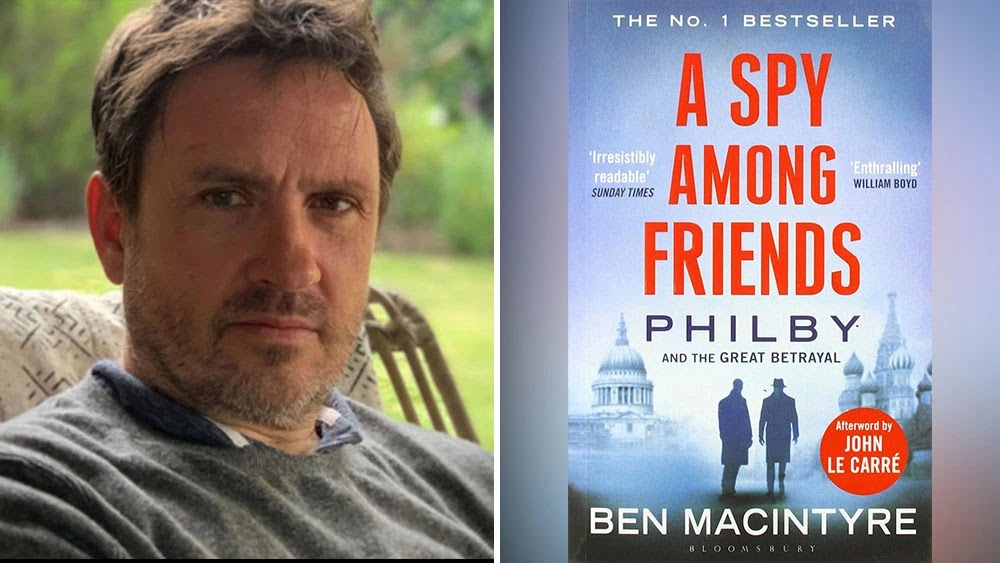
The coldest war is within 🗝 A Spy Among Friends | ITVX


SEE ALSO :

https://tweedlandthegentlemansclub.blogspot.com/2019/12/the-crown-season-three-was-queens-art.html


https://tweedlandthegentlemansclub.blogspot.com/2022/02/when-five-cambridge-university-students.html


A Spy Among Friends review – don’t take your eyes off this star-packed espionage thriller


Guy Pearce is a charismatic traitor, Damian Lewis is an enigma and Anna Maxwell Martin carries along a fabulous drama that’s full of excitement – if a tad stuffy


Rebecca Nicholson

Thu 8 Dec 2022 01.00 EST

https://www.theguardian.com/tv-and-radio/2022/dec/08/a-spy-among-friends-review-dont-take-your-eyes-off-this-star-packed-espionage-thriller


The story of the notorious MI6 agent and Soviet spy Kim Philby has been told numerous times before, but A Spy Among Friends (ITVX) has a fresh bash at it, using Ben Macintyre’s book of the same name as its source and inspiration. The stakes are high. This is one of the flagship dramas to launch ITV’s revamped online player and new subscription service. It comes with a starry cast and what should be an irresistible tale of intrigue, double-crossing and suspense, stretched out over multiple locations from Istanbul, Beirut and London to Moscow and Ohio.


It begins with the big reveal that Philby (Guy Pearce) is a traitor who has been working for the KGB and feeding them intel for the past 20 years. His close friend and fellow SIS (AKA MI6) agent Nicholas Elliott (Damian Lewis) is tasked with going to Beirut to retrieve Philby and extract a full confession, despite appearing to doubt the depth of his friend’s betrayal. It becomes a sort of espionage stew at this point, jumping around in time from the early days of Philby and Elliott’s friendship in the second world war, to MI5’s 1963 interrogation of Elliott, to work out who knew what about Philby and when.


This is not the kind of drama one can watch with an eye on something else. Heaven forbid you get distracted by a text message; there are a couple of instances where I had to rewind several minutes because I briefly looked away. There are so many layers to peel back. Elliott is looking into Philby’s betrayals, but MI5 are looking into Elliott and Philby and MI6, and everyone involved is hoping the CIA doesn’t find out about it before they get their ducks in a row. That is a lot of spy-on-spy spying.


There’s no denying that this is a fabulous cast. Lewis is suitably ambiguous as Elliott, who carries with him the hurt of a jilted lover and the confusion of a man whose entire belief system is falling apart. Pearce makes Philby’s charisma apparent for all to see, and makes the most of his range, whether that’s taking part in a West End song and dance or dealing with the fallout from his unmasking. Anna Maxwell Martin plays Lily Thomas, an MI5 agent looking into what exactly happened. Lily is a “composite” of real people, an invention to carry the drama along. When she sits down to business, at a desk with a tape recorder, Line of Duty fans will surely be waiting for that long beep. “Could you explain to me why you let the most dangerous Soviet penetration agent this country has ever known leg it?” she asks, sternly, as we learn how Philby was able to abscond.


There are plenty of small thrills to be had from a world built on codes and double meanings. Men with umbrellas exchange instructions in newspapers; names are seemingly mispronounced, in order to convey a clandestine message. The most intriguing code of all, which A Spy Among Friends excels at exploring, is that of class and tradition. There is an upper-echelons fantasy of Englishness at play. MI6 is an old boys’ network where decisions of international importance are hashed out in members’ clubs and on cricket pitches. When that is questioned by one of their own pledging his allegiance to the communist cause, they are almost as baffled and offended as they are alarmed. But the old world is changing, and Thomas – northern, female, married to a Black doctor – is supposed to represent that. It’s laid on a bit thick, but Maxwell Martin just about carries it off.


Yet ironically, given that it deals with the fall of the stuffy old guard, there’s something a little stuffy and uptight about the whole thing. There is plenty of excitement in the material – ambushes, bombs, chases, executions, and, of course, a royal connection, when Sir Anthony Blunt turns up – yet it still manages to drag its feet. It tries to get around the complexity of the plot with a number of conversations simply explaining what is going on. These are useful but oddly static, and certainly slow the momentum. Perhaps it suffers from an unfortunate comparison with another recent series adapted from a Macintyre book, SAS Rogue Heroes, which channels its fascinating history lesson into something far more vivacious and entertaining. This is all very fine and elegant, but it’s lacking in charisma.


A Spy Among Friends is available on ITVX in the UK and BritBox in Australia


A Spy Among Friends is a British espionage thriller television series, starring Guy Pearce and Damian Lewis. It is based on the book of the same name by Ben Macintyre, adapted by Alex Cary.


Critical reception of A Spy Among Friends was mixed, with Rebecca Nicholson of The Guardian saying, "There are plenty of small thrills to be had from a world built on codes and double meanings."Stephanie Bunbury with Deadline wrote that the "unfolding of their negotiations" was "not seat-of-your-pants televisual excitement, but it is the stuff of sustained intrigue". Jay Skelton with Reel Mockery called A Spy Among Friends "frustrating to watch". However, Nick Hilton with The Independent said, "there is much to enjoy about A Spy Among Friends".


EPISODES

1             "Boom-ooh-yatatatah[2]"           Alexander Cary Nick Murphy       8 December 2022

2             "The Admiral's Glass"     Alexander Cary Nick Murphy       8 December 2022

3             "Allegory of the Catholic Faith"  Alexander Cary Nick Murphy       8 December 2022

4             "Vodka"               Alexander Cary Nick Murphy       8 December 2022

5             "Snow" Alexander Cary Nick Murphy       8 December 2022

6             "No Man's Land"             Alexander Cary Nick Murphy       8 December 2022


Based on             A Spy Among Friends by Ben Macintyre

Written by          Alex Cary

Directed by        Nick Murphy

Starring

Damian Lewis

Guy Pearce

Country of origin             United Kingdom

Original language            English

No. of episodes 6

Production

Executive producers      

Alexander Cary

Bob Bookman

Alan Gasmer

Peter Jaysen

Patrick Spence

Nick Murphy

Producers           Chrissy Skinns

Damian Lewis

Production companies  

Sony Pictures Television

ITV Studios

Veritas Entertainment Group

Ginger Biscuit Entertainment


Thursday, 15 December 2022

What did we learn from Volume II of the Harry & Meghan Netflix documentary


15m ago

13.46 GMT

https://www.theguardian.com/tv-and-radio/live/2022/dec/15/harry-meghan-netflix-documentary-royal-family-william-kate-charles-live-reaction#top-of-blog

What did we learn from Volume II of the Harry & Meghan Netflix documentary

Netflix have released the final three episodes of the Harry & Meghan documentary. Here is what we learned:


  • The Duchess of Sussex spoke of having a miscarriage while living in the US after the birth of the couple’s first child, which Prince Harry says he blames on the actions of Associated Newspapers – publisher of the Mail On Sunday and Mail Online.
  • The couple were engaged in legal action over the paper reproducing in February 2019 a letter that Meghan had sent to her estranged father, Thomas Markle. Harry says: “I believe my wife suffered a miscarriage because of what the Mail did. I watched the whole thing. Now, do we absolutely know that the miscarriage was caused by that? Of course we don’t. But bearing in mind the stress that caused, the lack of sleep and the timing of the pregnancy – how many weeks in she was – I can say from what I saw, that miscarriage was created by what they were trying to do to her.”
  • Harry claimed his brother, the Prince of Wales, screamed and shouted at him at a crisis summit in January 2020 at Sandringham in front of the Queen. His wife, Meghan, had “deliberately not been invited, Harry said, to the gathering at which the couple’s plans to step back from royal duties was to be discussed. Harry says he went to that Sandringham meeting with five options ranging from option one “all in”, to option five “all out”, and that in the meeting he chose option three – for them to have their own jobs, but continue to support the Queen’s work in the Commonwealth, while living abroad in Canada. “It became very clear,” Harry said, “that the option was not up for debate. It was very terrifying to have my brother scream and shout at me and my father says things that were just simply untrue, and my grandmother quietly sit there and sort of take it all in.”
  • Harry said a joint statement that was issued on the day of the Sandringham meeting declaring a front page story about the brothers’ relationship as false, offensive and potentially harmful was done without his knowledge.
  • The Duke of Sussex accused his father’s office of leaking private correspondence between Harry and Charles to the media over his plans to move to Canada. “The key piece of that story that made me aware that the contents of the letter between me and my father had been leaked was that we were willing to relinquish our Sussex titles. That was the giveaway”. Harry maintains this possibility was only mentioned in written communications with his father up to that point.
  • The Duchess of Sussex described feeling suicidal after her treatment by the British media. In a clip Meghan said she just wanted to not be there, and Harry said that he did not handle the situation well and “I hate myself now” for the way he reacted as “institutional Harry” rather than “husband Harry”. “I wanted to go somewhere to get help,” Meghan says. “But I wasn’t allowed to. They were concerned how that would look for the institution.”
  • Meghan said they did the interview with Oprah Winfrey because “people just didn’t really understand why we left” and that without their side of the story being put, there was a vacuum. “It was less about setting the record straight as filling in the blanks that other people were filling in for us.”
  • Meghan said she thought the main takeaway from the Oprah interview would be about her struggles with mental health, not race. The couple were seen reacting to the statement from the Queen released in the wake of the interview being shown, in which the late Elizabeth II said “The whole family is saddened to learn the full extent of how challenging the last few years have been for Harry and Meghan. The issues raised, particularly that of race, are concerning. While some recollections may vary, they are taken very seriously and will be addressed by the family privately.”
  • Harry described one of the first things he saw on social media after the birth of his son Archie was the tweet by BBC Radio 5 Live presenter Danny Baker which depicted a black and white photo of a well-dressed couple next to a suited chimpanzee with the caption: “Royal baby leaves hospital”. Baker departed the BBC over the tweet, which he had subsequently deleted.
  • Meghan spoke of her disquiet over death threats, saying of the media coverage of her “You are making people want to kill me. It’s not just some tabloid. It’s not just some story. You are making me scared. Are we safe? Are the doors locked? That’s real. Are my babies safe? And you’ve created it for what? Because you’re bored? It sells your papers?”
  • Harry said returning to the UK for the funeral of his grandfather, Prince Philip was hard because of the attitude of his brother and father towards him. “It was hard. Especially spending a time having chats with my brother and father who were just, you know, very much focused on the same misinterpretation of the whole situation. None of us really wanted to have to talk about it at my grandfather’s funeral, but we did. I’ve had to make peace with the fact that I’m probably never going to get genuine accountability or a genuine apology.
  • Buckingham Palace and Kensington Palace have declined to comment the documentary.

LIVE Harry & Meghan Netflix documentary: second instalment launches – live reaction


LIVE

Harry & Meghan Netflix documentary: second instalment launches – live reaction

Netflix launches final three episodes at 8am GMT with trailer hinting Sussexes will accuse royal family of briefing against them in media

9m ago

08.03 GMT

Martin Belam

Thu 15 Dec 2022 08.09 GMT

https://www.theguardian.com/tv-and-radio/live/2022/dec/15/harry-meghan-netflix-documentary-royal-family-william-kate-charles-live-reaction


I’ve started watching episode four, which has begun with archive footage of the weddings of the late Queen Elizabeth II, and then of Charles and Diana, and then of William of Kate.


There are soundbites from British TV chatshows describing Meghan as manipulative, and then some positive vox pops from the public about the couple being “the one that is going to change the face of the royal family”, and Meghan says “And I was really hopeful that was true.”


I’ll be watching the documentary this morning – partly because you might not want to sit through it all or be able to watch it right at the second it arrived – and I will bring you the key quotes and lines. I will also be monitoring reaction to the allegations it contains across the media, and will bring you some of the highlights of that too.

Tuesday, 13 December 2022

Why does the Harry and Meghan psychodrama continue? Because no one really wants it to end


Why does the Harry and Meghan psychodrama continue? Because no one really wants it to end

Marina Hyde


They say they’re seeking a new life but the Sussexes seem obsessed with their old one, and people enraged by them can talk about little else

‘The Sussexes really only have one story to tell – admittedly, it’s a dramatic and sensational one.’


Tue 13 Dec 2022 12.32 GMT

https://www.theguardian.com/commentisfree/2022/dec/13/harry-meghan-psychodrama-continues-netflix


Of all the charges laid at the door of Harry and Meghan, we can reasonably discount the idea that being paid by Netflix is the sin to end all sins. I’m not sure how people think the British royal family have historically accrued their vast wealth, but a contract with a streaming giant is right down the list of money-spinning horrors.


Let’s face it, there are a lot worse ways to lay your hands on a reported £88m in today’s money. No one dissolved the monasteries, here. No one ran a foreign country as an extraction colony. Looting-wise, no one did much beyond taking a call from telly warlord Ted Sarandos and thinking: yes please. This is the market value of my truth.


Anyway, on with the show. Again. I can’t help feeling the Sussexes increasingly come across as a pair of ancient mariners with a TV contract, condemned to tell their tale to everyone they meet. After this latest exhaustive (and fairly exhausting) six-parter, many will now feel they have seen enough of the albatross in question, which has been hung around the neck either of the Sussexes or the news media, depending on to whom you speak. Both sides of this forever war seem locked in an endless cycle of tale-telling, which will ultimately have to be moved on from. Or not, if it keeps being lucrative for both sides (of which more shortly).


Despite the work that has gone into crafting the impression of a further banquet of revelations, the Sussexes really only have one story to tell. Admittedly, it’s a dramatic and sensational one that has sold countless books and papers and driven online traffic and TV ratings around the world. They told it to Oprah last year, and now they are telling it again to Netflix viewers.


In some ways, there’s nothing wrong with telling the same story over and over again. John Grisham does it, though he is at least able to change the names and locations. The most successful movie stars have always repeatedly played some lightly adjusted version of their persona, on the timeworn and financially proven principle of giving the public what it wants. That’s showbiz.

‘As for the consumers of the endless psychodrama, there is little so enduring as the public’s unwillingness to see their part in all of this.’


The question with Meghan and Harry is how long it can go on after this latest rather repetitive instalment – or, indeed, how long anyone focused on new horizons really wishes to be trapped in this same old cycle. The cycle is certainly of the vicious variety. The Sussexes publicly say something; the papers pounce on it and make merry hell with it for days or weeks; some drama-queen palace courtier makes a disparaging off-the-record comment; a new grievance is thereby minted on which the Sussexes will soon publicly say something. Repeat cycle.


But is this just going to be it, for ever? The returns look likely to be diminishing. It will – surely? – eventually become incredibly boring. Indeed, for many, it already has, with even some sympathisers now judging that things could be a lot worse. Then again, I’m not sure they have the cost of living crisis in Montecito.


Despite it being a cliche, I do think one of the soundest pieces of advice is that the best revenge is a good life. However, the more classic form of revenge, which the Sussexes are pursuing, is much more lucrative. For all their talk of escape, they are still locked in a destructively symbiotic relationship with their detractors. “You shut up!” “No, YOU shut up!”


Crucially, though, their detractors also have a choice, which is to leave the entire thing alone. We do, after all, know this story now, and pretending that unignorable news is being made is just something you tell yourself as a fig leaf to keep running it all, at remorseless length, because it sells papers and drives traffic and engagement. But hey – everyone’s on the take.


As for the consumers of the endless psychodrama, there is little so enduring as the public’s unwillingness to see its part in all of this. A few years ago, Prince William and his brother participated in a documentary about their mother, in which they recalled the scenes in the wake of Princess Diana’s death, when the children were famously forced out in public to view tributes and observe the crowds. “People wanted to grab us, touch us,” remembered William. “They were shouting, wailing, literally wailing at us, throwing flowers, and yelling, sobbing, breaking down – people fainted and collapsed. It was a very alien environment.”


Alien is a kind way of putting it. Those people behaved weirdly and appallingly, yet would never dream of recognising their behaviour as such. Many of them are the same people now howling about the Sussexes, the same people who absolutely hoovered up the intrusive coverage of Diana, the same people who then pretended to be disgusted by it all after she died. The same people who demanded the late Queen leave off comforting her young grandsons at Balmoral, despite the fact they’d lost their mother, and come back to London to … what? Comfort them? Grow up.


But then a lot of people love all this stuff, whether or not they care to admit it. They love the drama, love to take it personally, love to get angry about it, love to act as if they know the family, love to paw bereaved children, love to comment, love the whole endless shooting match. Don’t get me wrong – I too am a grateful beneficiary, given I’ve just got another column out of it. But it all cuts both ways. A disapproving and enraged market is still a market. Whatever you think of Meghan and Harry and their truth, it’s difficult not to judge that much of the British public has a long, long way to go before it faces up to its own.


Marina Hyde is a Guardian columnist