Friday, 31 May 2013

Pages from the Goncourt Journals ...


Succès de scandale
Their novels might be unreadable and forgotten, but the Goncourt brothers' journals - to which they confided all their thwarted ambition, literary gossip and backbiting - are a delight, discovers Geoff Dyer
Geoff Dyer
The Guardian, Saturday 9 December 2006

Among many other things the Journal is a vast archive of anxiety and thwarted ambition. The brothers Goncourt began keeping it on what was, for them, a momentous occasion: the publication, on December 2 1851, of their first novel. Unfortunately, it was also a momentous day for France: Napoleon III seized power in a coup d'état. With the city under martial law their eagerly- anticipated debut made almost no impact. So the Journal became a repository of all the woes and disappointed hopes suffered in their "hard and horrible struggle against anonymity": critical indignities, lack of sales, the perfidy of reviewers, the unmerited success of friends (some of whom, like Zola, were celebrated for techniques the Goncourts claimed to have pioneered).

As happens, lack of success only increased the brothers' sense of neglected worth. "It is impossible to read a page by them," André Gide confided in his journal, "where that good opinion they have of themselves does not burst out from between the lines." He was referring to their novels (now almost entirely forgotten) but this sense of wounded self-esteem greatly increases the pleasure of the Journal for which they are remembered. "Oh, if one of Dostoevsky's novels, whose black melancholy is regarded with such indulgent admiration, were signed with the name of Goncourt, what a slating it would get all along the line." That's in 1888; by 1890 the tone is of comic resignation (there is much comedy in these pages) as Edmond realises that he has devoted the whole of his life "to a special sort of literature: the sort that brings one trouble".

It's not just the brothers themselves; their friends are constantly sniping about each other's success or bemoaning the lack of their own. Zola, "whose name echoes round the world", is particularly "hard to please." Permanently "dissatisfied with the enormity of his good fortune", he is "unhappier than the most abject of failures".

An abundance of famous names renders the most banal entries compelling. "A ring at the door. It was Flaubert." "Baudelaire was at the table next to ours." Even people who make only a cameo appearance are fixed with a precision to match that of the recently invented camera. The glimpse of Baudelaire continues: "He was without a cravat, his shirt open at the neck and his head shaved, just as if he were going to be guillotined."

Unlike photographs, these verbal pictures develop and change over time, according to fluctuations in the fortunes and health of the people concerned and their shifting relationships with the authors of the Journal. Part of the ambition behind the project was to show the Goncourts' acquaintances - many of whom happened to be the great writers of the age - "as they really are, in a dressing-gown and slippers". At one point a fellow guest is shocked by Flaubert's "gross, intemperate unbuttoning of his nature" but the reader is grateful that the Goncourts were on hand to witness such things, even when - especially when - the conversation among these men of letters becomes - as it often did - "filthy and depraved."

Among all the talk of fornication, hookers, venereal disease and drunkenness there is some literary discussion too, and not just about "the special aptitude of writers suffering from constipation and diarrhoea". On first hearing Flaubert read from Salammbo the brothers are disappointed to discover that he "sees the Orient, and what is more the Orient of antiquity, in the guise of an Algerian bazaar. Some of his effects are childish, others ridiculous ... [T]here is nothing more wearisome than the everlasting descriptions, the button-by-button portrayal of the characters, the miniature-like representation of every costume." The brothers are often vehement participants in debate - blasphemously insisting that "Hugo has more talent than Homer" - but much of the time they are eager flies on a wall, conscious of the privilege of witnessing a master like Flaubert as he illuminates what, to him, is truly shocking about the author of Justine: "there isn't a single tree in Sade, or a single animal."

By the time they meet the author of Madame Bovary he is already a celebrated writer, already "Flaubert". Others, like the "strange painter Degas", enter inconspicuously with none of the aura subsequently bestowed upon them by fame. When they first encounter their "admirer and pupil Zola" he strikes them as a "worn-out Normalien, at once sturdy and puny" but with "a vibrant note of pungent determination and furious energy".

Many people come strolling through the Journal but one young man who went on to distinguish himself in the world of letters does not appear to merit so much as a mention. When Henry James met Edmond ("and his dirty little companions") in 1885 he was struck by "something perverse & disagreeable" about him. Expanding on this in an interminable review of the Journal, James is baffled by the way that the "weakness" of these "furious névrosés" "appears to them a source of glory or even of dolorous general interest". The fact that they do not appear anything like so sickly or neurotic to us is proof of a sort that the Goncourts were right: their malaise was indeed proof of their modernity. The self-styled "John-the-Baptists of modern neurosis" prided themselves on being "the first to write about the nerves".

The atmosphere of metaphysical sickness is clearly related to the dark shadow cast by actual physical illness. In 1861 the death of their friend Henri Murger had prompted an agonised reflection on mortality. The unnamed illness that killed Murger was mysterious and rare; syphilis was so pervasive that in 1877 Maupassant, initially, was "proud" to have caught "the magnificent pox. At last!" By then Edmond had had seven years to mourn the utterly unmagnificent death, also from syphilis, of his beloved brother. Jules's passing made Edmond "curse and abominate literature" to such an extent that, after describing with clinical precision and agonising detail the gradual collapse of his brother's physical and mental capacities, he decided to abandon the Journal.

The habit of daily transcription was not so easy to break, however, and Edmond soon returned to the task. With the Franco-Prussian war, the siege of Paris, and the commune, history comes crashing in on the daily accounts of visits, incidental observations and reflections. The entries from the post-Jules period are as varied, fascinating, compelling and odd as anything that has gone before. (I am particularly fond of the passage describing "the mania for fighting" which so takes hold of Drumont that "Nature is nothing for him now but a setting for affairs of honour. When he took the lease on his house at Soisy, he exclaimed: 'Ah, now there's a real garden for a pistol duel.'") But these later sections are interesting in two additional and complicating ways.

As early as 1867 the brothers had reflected on the transience of all pleasures: "Everything is unique, nothing happens more than once in a lifetime. The physical pleasure which a certain woman gave you at a certain moment, the exquisite dish which you ate on a certain day - you will never meet either again. Nothing is repeated, and everything is unparalleled." Naturally, this affirmation of the unrepeatable uniqueness of all experience - especially once his brother is no longer there to share, record and analyse it with Edmond - encourages recollection and reverie. As Edmond ages so he becomes more and more absorbed by memory.

The second factor in the distinctive quality of the latter parts of the Journal derives from the fact that in 1886-7, after much reluctance, Edmund begins publishing them. As a consequence the diaries from that date onwards have to come to terms with how the earlier ones have been received - both by the critics and by the people mentioned, described or quoted in them. The Journal, in other words, starts being about itself.

Plenty of people felt embarrassed, upset, outraged or betrayed by the Goncourts' record of things they had said or had said about them. This is part of the Journal's charm and value. Christopher Isherwood, when he finished reading them, on July 5 1940, was in no doubt as to their importance in this regard: "Here, gossip achieves the epigrammatic significance of poetry. To keep such a diary is to render a real service to the future." This realisation may well have been an incentive to persist with his diaries which have since acquired a similar value of their own. Or, to put it another way, it is as if the Journal, which caused people to discuss - and thereby add to - their content, continues to prompt the same reaction and so, in a sense, are still being incrementally extended by a constantly expanding cast of characters, readers and contributors, from the 19th century to Gide, Isherwood, Vidal and beyond.

Obviously, the Goncourts' Journal has been a wonderful resource for historians and biographers alike, but not everyone has concurred with the verdict of Proust's narrator in Time Regained: "Goncourt knew how to listen, just as he knew how to see." Coming as it does from a work in which fiction and fact are famously and intimately entwined, this character reference is itself unreliable and inadmissible. Certainly it is contested by a conversation recorded by Gide in a journal entry from January 1902: "'According to what I have been able to verify,' says Jacques Blanche, 'nothing is less true than their journals.'" Claiming to remember perfectly certain conversations which the Goncourts had falsified Blanche flatly contradicts Proust: "I assure you, Gide, that they didn't know how to listen."

Blanche rants on, furnishing more and more examples, only to have the rug pulled from beneath his feet by the author of The Counterfeiters. "'But', I say, 'the words that he puts into the mouths of various people, however false they may be according to you, are almost never uninteresting. Watch out, for the more you reduce his stature as a stenographer, the greater you make him as a writer, as a creator.'"

We only have Gide's word that he had the last word in this exchange way but it reminds us that what we are dealing with here is not simply a resource but a compendious work of literature. "A book is never a masterpiece," the brothers declare in 1864. "It becomes one." The process of becoming is inevitably more awkward for a journal - which did not even set out to be a book; its imperfections and indiscretions, its lack of artistic and thematic organisation - all the things, in fact, that make it a pleasure to read - militate against its ever becoming one. But while Sainte-Beuve - a major player in these pages - believed his notebooks to be "the lowest drawer of the writing desk" the Goncourts' Journal has come to deserve a place in the highest.


· Pages from the Goncourt Journals has just been reissued by New York Review of Books Classics.


Masters of Indiscretion
By ADAM KIRSCH | November 29, 2006 / http://www.nysun.com/arts/masters-of-indiscretion/44314/
Book Review
Pages from the Goncourt Journals
by Edmond de Goncourt and Jules de Goncourt
In every generation, one city emerges as the capital of the republic of letters. This is not necessarily the place where the best writing is being done: Masterpieces are just as likely to come from Jane Austen's Hampshire parsonage as from Dr. Johnson's London coffeehouse. It is, rather, a symbolic homeland of the imagination, a metropolis that sets the terms of critical judgment and literary debate. Such capitals are inevitably temporary, passing away as history and chance assemble other geniuses in other places. But long after they disappear, they retain a peculiar power to seduce the imagination. How many readers have wished they could talk with Goethe and Schiller at Weimar, or go to Greenwich Village parties with Hart Crane and Edmund Wilson?

Of all the cities that have served as literature's capital, none is more famous or infamous than the Paris of the Second Empire; and no writers deserve more credit for its legend than the Goncourt brothers. Edmond de Goncourt, born in 1822, and his younger brother Jules, born in 1830, formed a partnership that is possibly unique in literary history. Not only did they write all their books together, they did not spend more than a day apart in their adult lives, until they were finally parted by Jules's death in 1870.

The Goncourts wrote prolifically in every genre, but they never had the kind of success they so desperately wanted. They were less admired than Flaubert, though they shared his devotion to style, and less popular than Zola, though they pioneered the techniques of naturalism. Their plays flopped, while Alexandre Dumas got rich from "La Dame aux Camélias." Their works on history and art were overlooked, as Hippolyte Taine and Ernest Renan became intellectual demigods. By the time he reached his 60s, Edmond was frantic to do something, anything, to secure his reputation: "My constant preoccupation," he wrote, "is to save the name of Goncourt from oblivion in the future by every sort of survival: survival through works of literature, survival through foundations, survival through the application of my monogram to all the objets d'art which have belonged to my brother and myself."

As it turned out, however, it was none of these things that rescued the Goncourts from "oblivion." It was, rather, their Journals — the scandalous, vain, vengeful, brutally honest diaries in which the two brothers, and then Edmond alone, wrote the secret history of their age. Starting in 1851, the year their first novel was published, and ending just twelve days before Edmond's death in 1896, the Goncourt Journals helped to immortalize their period as well as their authors. If we are still fascinated by the literary life of Paris in the late 19th century — not just the books but the personalities, the rivalries and friendships, the piquant combination of idealism and brutishness — we have the Goncourts to thank.

Both the idealism and the brutishness are on full display in "Pages from the Goncourt Journals" (New York Review Books, 434 pages, $16.95), a one-volume selection edited by the late scholar and translator Robert Baldick. This edition, which first appeared in 1962,is the latest of many delightful books brought back into print by New York Review Books, whose imprimatur has become a reliable guarantee of reading pleasure. In this case, the pleasure is decidedly of the guilty variety.

The Goncourts belonged to a world where poets mingled with princesses, politicians, and prostitutes, and they faithfully reported gossip from all levels of society, the more lurid the better. Indeed, the most representative sentence in the Journals may be the one that begins the entry for September 25, 1886: "This morning in the garden we talked about copulation." It was a subject that never got boring. A friend of a friend had a mistress who claimed to have slept with Kaiser Wilhelm II: "She had orders to wait for him naked, stark naked except for a pair of long black gloves coming up above her elbows; he came to her similarly naked, with his arms tied together ... and after looking at her for a moment, hurled himself upon her, throwing her onto the floor and taking his pleasure with her in a bestial frenzy."

Swinburne, the English poet, would entertain visitors with "a collection of obscene photographs ... all life-size and all of male subjects." Zola had a second family that he hid from his wife; Turgenev lost his virginity to one of his serfs at the age of 12. Robert de Montesquiou, the aesthete who was the original of Proust's Charlus, had his first love affair "with a female ventriloquist who, while Montesquiou was straining to achieve his climax, would imitate the drunken voice of a pimp, threatening the aristocratic client."

Many of these stories seem to fall into the category of "too good to check." But they provide a sense of what conversation must have been like at the famous "diners de Magny," named after the Paris restaurant where the Goncourts, Sainte-Beuve, Gautier, and other writers gathered. It was the world's most illustrious locker-room, where lechery was ennobled by worldweary romanticism: "Debauchery," the Goncourts wrote in 1861,"is perhaps an act of despair in the face of infinity."

But the Goncourts' Paris was also an intellectual boxing ring, where no one was ever allowed to forget his place in the standings: whose book had sold best, who had gotten a bad review, whose play was booed on opening night. "Coming away from a violent discussion at Magny's," the Goncourts write (using the first person singular, as always),"my heart pounding in my breast, my throat and tongue parched, I feel convinced that every political argument boils down to this: ‘I am better than you are,' every literary argument to this: ‘I have more taste than you,' every argument about art to this: ‘I have better eyes than you,' every argument about music to this: ‘I have a finer ear than you.'"

The Goncourts, to their unending frustration, usually wound up at the bottom of the totem pole. They never had the success they thought they deserved, and over the years they became less and less able to tolerate the successes of their friends. It is true that their career was dogged by exceptionally bad luck. The first entry in the journal was made on December 2, 1851, the day the brothers' first novel was published — and also, it so happened, the day that Napoleon III overthrew the Republic and took power as Emperor. As a result, the novel was completely ignored — "a symphony of words and ideas in the midst of that scramble for office," as the brothers ruefully put it.

The Goncourts' next big chance came in 1865, when their groundbreakingly realistic play "Henriette Maréchal" was performed at the Théâtre Français. But once again politics interfered, as protesters drowned the opening-night performance in "a tempest of hisses," angered by the playwrights' friendship with the emperor's cousin. Jules died without ever enjoying a great success, and Edmond spent the rest of his life seething at younger, more talented writers like Zola and Maupassant. The last third of the journal alternates between self-pity ("I am condemned to being attacked and repudiated until the day I die") and jealous digs at friends: "Maupassant's success with loose society women is an indication of their vulgarity," Edmond writes in 1893, "for never have I seen a man of the world with such a red face, such common features, or such a peasant build."

Many writers think things like this about their rivals, but few have dared to record them for posterity. The Goncourts' very shamelessness, their refusal or inability to censor their discreditable thoughts, is what makes their journals so absorbing — as Edmond himself knew full well. In his last years, he began to publish the early volumes of the journals, to the fury of certain friends who found old embarrassments dredged up in print. But he refused to be intimidated: "Monsieur Renan calls me an ‘indiscreet individual,'"Edmond told an interviewer in 1890. "I accept the reproach and I am not ashamed of it... For ever since the world began, the only memoirs of any interest have been written by ‘indiscreet individuals.'" The measure of the Goncourts' indiscretion is that their journals are still so interesting, more than a hundred years later.

akirsch@nysun.com


Thursday, 30 May 2013

Kind Hearts and Coronets ?

Lord of all he surveys: Edward Richard Lambton the 7th Earl of Durham with wife Marina in 2011.
 The blue-blood family feud that would make Jeremy Kyle blush: Their father quit as a  minister after being caught with a prostitute. Now, four of Lord Lambton's children are battling over his millions - and this week it turned REALLY dirty
By GUY ADAMS

PUBLISHED: 22:46 GMT, 24 May 2013 in The Daily Mail / http://www.dailymail.co.uk/news/article-2330655/Their-father-quit-defence-minister-caught-prostitute-Now-Lord-Lambton-s-children-locked-bitter-battle-millions--week-turned-REALLY-dirty.html

 Surely it is a sign of the times that Edward Richard Lambton, who as the 7th Earl of Durham is one of Britain’s loftiest aristocrats, should chronicle his daily life via Facebook.
 Here, the blue-blooded 51-year-old, who calls himself ‘Ned,’ offers his circle of upmarket ‘friends’ a glimpse at his rarefied existence.
 In one corner of the site, you’ll see his striking property Lambton Castle, the faux-Norman family seat in County Durham built by ancestor John Lambton, a Victorian statesman.
 In another, you can see nearby Biddick Hall, a ten-bedroom Queen Anne house, surrounded by a 7,000-acre estate, where Ned was partly raised, and which he now rents out for weddings and corporate jollies.
 Friends can watch videos of Ned, who also owns a motor yacht called Lone Wolf, playing guitar in his band, Pearl TN, in a studio near his apartment in Kensington. They can also, if they so desire, ponder pictures of Ned’s third wife Marina Hanbury, a former model 22 years his junior.
 She can be seen variously showing off their bonny 18-month-old daughter, Lady Stella, beaming at her wedding to Ned in 2011, and posing in lace underwear, in the couple’s bedroom, later that year.
 But the most striking images of his recent life were surely taken at the Villa Cetinale, his magnificent 12-bedroom pile in rural Tuscany. The vast property, with its marble floors, four-poster beds, and sweeping staircases, was purchased by Ned’s late father, Antony, in the Seventies.
 It became famous as the bolthole to which Antony, the former Tory minister better known as Lord Lambton, fled after being forced to resign in 1973, when he was photographed in bed with two dominatrix prostitutes.
 Last year, Ned invited Vanity Fair magazine, and its photographer, to tour the palatial Villa Cetinale, which is set in 165 acres of gardens and where his recent house guests included those paragons of virtue Kate Moss and Jade Jagger.
 Many of their photos captured the 17th-century baroque property’s priceless collection of art, and antiquities, along with its rambling gardens and olive groves. But some had an edgier feel.

Notorious: Lord Lambton at the Villa Cetinale, the magnificent 12-bedroom pile in rural Tuscany.
 . One particularly striking picture, for example, showed Ned in chinos and a panama hat relaxing on a sun lounger alongside not one, but two topless socialites — one blonde; the other brunette.
 To the casual observer of these images, it would be fair to assume the playboy Earl, whose inherited personal fortune — including his estates — has been estimated at £180 million, enjoys a carefree life.
 But reality is rarely quite as simple as it may first appear — especially in the turbo-charged world of our aristocratic elite.
 Indeed, a rather closer examination of Ned’s online activity provides clues about the stupendously ugly controversy which has lately enveloped the House of Lambton.
 You get an immediate whiff of it by perusing the Earl’s Facebook ‘friends’. There are 323, including an array of prominent toffs — from Petronella Wyatt to the notorious former jailbird and drug addict James, the Marquess of Blandford.
 But not one of these ‘friends’ has the surname Lambton.
 You get another clue from Ned’s ‘profile picture’ on the social network. Recently, it was updated to an image of a volcano,  surrounded by mushroom clouds. Before that, it showed Ned, in  martial arts clothes, preparing to deliver a karate chop.
 Both images are grimly appropriate. For Ned is currently a man at war. And, as the absence of Lambtons from his friend circle suggests, his opponents are among his closest relatives.
 Last week, it emerged that the Earl had recently served a writ at the High Court in London against three of his five elder sisters.
 It was the latest development in an unseemly dispute that stretches back to 2006, when Ned’s father died in Italy, at the age of 84.
 The death allowed Ned to inherit the Earldom of Durham. He also became the beneficiary of a vast property portfolio, which is largely controlled, apparently for tax purposes, by overseas trusts.
 Controversy was soon to break out, however, over his father’s will, which valued his remaining estate at £12 million. It stipulated that all of this money would be left to Ned. Not one of the five sisters was to receive a penny.
 Though in keeping with the English tradition of primogeniture, under which first born sons inherit everything, those terms are at odds with Italy’s Napoleonic law, which dictates that assets must be evenly split between siblings.
 The three sisters, Beatrix, Lucinda (known as Lucy), and Anne, say they were led to believe that Ned would voluntarily offer them a small portion of their father’s estate.
 But it wasn’t forthcoming. They are therefore now attempting to sue for a slice of the £12 million pot, which was largely comprised of paintings by the neo-classical artist Josef Zoffany.
 The sisters argue that since Antony had lived in Italy with his mistress for two decades — and been resident there, for tax purposes, until the time he died — his will ought to be subject to Italian law.
 Indeed, in his will — a copy of which has been obtained by this newspaper — Antony declared himself to be ‘domiciled, resident, and ordinarily resident in Italy’.

Family Lambton: Baby Ned with his mother Lady Belinda known as Bindy Lambton and sisters
 After receiving Ned’s writ, the sisters said in a statement that he ‘has always thrown his toys out of the pram. The only difference this time is that the toys are his own family. It’s just terribly sad.’
 None of them will now speak further about the Downton Abbey-style dispute, saying they do not wish to jeopardise proceedings.
 ‘My lips are sealed,’ says Lady Lucinda, the 70-year-old TV personality and architectural commentator, when I call.
 But no such concerns trouble Lucinda’s husband Sir Peregrine Worsthorne, the former newspaper editor.
 ‘It’s a very sad business,’ he tells me. ‘It has broken up the family, and it is poisoning our lives. Ned has been entirely irrational and completely selfish. His treatment of his sisters has been highly insensitive.’
 Sir Peregrine, 89, denies that the sisters are motivated by greed, or an irrational jealousy of their younger brother. He says they’re seeking a small portion of his estate, equating to roughly £1 million each.
  ‘A million sounds like a lot, but it’s nothing to him,’ he adds. ‘He wouldn’t have to sell off the castle or anything. He’s very rich, and they’re not asking for something he couldn’t easily provide. But Ned just doesn’t like being told what to do.’
 And if the Earl fails to relinquish the cash, Sir Peregrine claims that the sisters will be left almost penniless. ‘This isn’t a case about greed, but necessity,’ he says.
 ‘I mean, Lucy hasn’t got a bean. She’s worked all her life in TV, and she’s 70 now. I’ve got my own children, so when I die she will be left pretty hard up.’
 Some of the money has already been promised by Lucinda to her grandson to pay for him to attend boarding school. Because the cash has yet to materialise, the child’s school was recently informed that he cannot attend.
 ‘It was rather embarrassing,’ adds Sir Peregrine.
 The other two sisters — Anne, 58, is an actress and Beatrix, 63, is a widow — are for their part ‘extremely hard up’, he says.
 ‘They really have very little. They were never sent to university, or allowed to learn how to earn a living. It’s terribly sad.’
 Sir Peregrine argues that aristocratic tradition gives Ned a moral duty to provide for siblings. ‘We just assumed that he would do something for them, in good time. But of course he never has. So it has come to this.’
 Ned, for his part, appears to believe otherwise.
 ‘Lord Lambton’s will left everything at his death in 2006 to his only son, having already provided for his other children,’ his lawyers said this week.
 ‘Three of Lord Durham’s five sisters are now claiming under Italian law a share of everything that Lord Lambton ever owned, even assets that were no longer owned by him at his death.’
 The lawyers claim a recent agreement to settle the dispute ‘fell apart’ at the last minute. ‘Lord Durham made a proposal.
 Unfortunately his sisters’ lawyer sought to include a term in the wording of the agreement, which can’t be agreed,’ the lawyers say. ‘An offer in excess of this sum remains on the table.’
 A friend of Ned, meanwhile, tells me he believes the sisters were ‘looked after’ during their father’s lifetime, and are now being ‘greedy’.
 ‘The simple fact is that you just can’t keep estates like this together if everything gets divided equally. The money, the capital, has to go with them, otherwise they won’t remain a going concern for the next generation. That’s why we have primogeniture.
 ‘Tony knew this. He was a very generous man, and a very rich man. He gave Lucinda her home, for example, which is now worth a million or two. And he certainly helped Beatrix, so don’t go thinking they got nothing.’
 Whoever you believe, the coming legal dispute is certainly shaping to be a deeply unpleasant.
 Indeed, Sir Peregrine says that during the course of the dispute Ned — whose parents were famously promiscuous — has already gone so far as to suggest that the sisters might not be Lord Lambton’s biological daughters.
 ‘That was completely below the belt,’ he adds. ‘And of course Ned’s paternity is just as chancy as theirs. When you look at the dates, the only child who was unquestionably [Lord Lambton’s] is Lucy, actually. The others are all in question.’
 Presumably his rationale is that Lucy was conceived at the beginning of her parents’ marriage, before they both slipped into a life of casual adultery.
 Should things continue to escalate, it is by no means impossible that the Earl of Durham and his sisters could be forced to submit to paternity tests.
 So how did a family which supposedly occupies the highest echelons of polite society become embroiled in a dispute headed for the sort of denouement you might expect from the Jeremy Kyle show?

Lord Lambton with Belinda Ned and Isabella, in the grounds of their home at Biddick Hall, County Durham in 1973
 Lord (Antony) Lambton is probably to blame. Tall, dark, handsome, and stupendously rich, he became a Tory MP in 1951 and was seen as a rising political star.
 But he failed to practise the conservatism he preached, was serially unfaithful to wife Bindy, visited prostitutes regularly and took drugs.
 In 1973, when he was a junior defence minister in Edward Heath’s government, the News of the World obtained photographs of him in bed with dominatrix Norma Levy and another woman, smoking cannabis.
 After being exposed as her client, Lambton promptly resigned. In a TV interview with Robin Day, he said he enjoyed visiting prostitutes because ‘people sometimes like variety’. In a debriefing with MI5, Lambton added that he had turned to debauchery because of the ‘futility’ of his day job  in government.
 Soon afterwards, he was fined £300 for possessing cannabis and amphetamines, and fled to Italy, where he took up residence at the Villa Centinale with a mistress, Claire Ward, who had been 1954’s debutante of the year.
 For the ensuing decades, until his death, she and Lambton held court at the villa, where he was dubbed the ‘King of Chiantishire’ and famed for hosting drug-fuelled parties.
 It was a legendarily debauched existence.
 One former lover of his from the era claimed that Lambton would pay black male prostitutes to sleep with her, while he watched. Countless others spoke of his relentless libido.
 Petronella Wyatt has claimed that he attempted to seduce her, while she was a teenager, by exposing himself.
 House guests over the years included everyone from the Rolling Stones to Princess Margaret and Prince Charles. In later years, Tony and Cherie Blair also paid a visit.
 Meanwhile, Lambton’s wife Bindy — who died in 2003 — remained in the UK, with their son Ned, who was 11 at the time of the Norma Levy scandal and went on to be unhappily educated at Eton.
 It is hardly surprising, given these circumstances, that the current Earl’s adult life would follow an unorthodox course.
 Though he’s never had what you might call a day job, Ned did play guitar with a rock band called the Frozen Turkeys in the Eighties.
 In 1983, he married Christabel McEwen, the mother of his eldest son, Fred, who is now a left-leaning environmental activist.
 They split up in the mid-Nineties — she moved swiftly on to the TV personality Jools Holland — after which Ned took up with second wife Catherine Fitzgerald, who is now the other half of actor Dominic West.
 In 2000, Ned moved to a mud hut on a beach in the Philippines, saying he wanted ‘to indulge all my Robinson Crusoe, Tarzan fantasies’ and, shortly afterwards, fathered a daughter called Molly, by then-girlfriend Jennie Guy, an Irish artist.
 He wooed third wife Marina, an old family friend, by sending her a Facebook message declaring: ‘I know I am way too old for you but I love you.’
 This privileged, if unstructured existence is said by Sir Peregrine to be at the root of the current family rift.
 ‘Ned has never been crossed in his life before, a life of complete self-indulgence,’ he says.
 ‘This is the first time he’s been questioned by anyone in his life. And, as someone who shares his father’s wilfulness, he seems to find that a very disagreeable experience.’
 The dispute has been hugely upsetting for Ned’s two other sisters Rose and Isabella (who is financially secure having married the wealthy landowner Sir Philip Naylor-Leyland).
 Both sides in this legal dispute have not spoken for over a year, including at family weddings and funerals, where according to Sir Peregrine ‘we now sit on opposite sides of a large church’.
 Of course, the longer things continue, the more both sides will pay to lawyers. The three sisters say the source of their legal funds is a ‘private matter’, though I understand that their costs are being underwritten by a wealthy acquaintance of the family who has a property near Villa Cetinale and is not fond of the Earl.
 Ned, meanwhile, has deep pockets, meaning that the dispute could yet continue for years.
 ‘If he really wanted to settle this, he could do it tomorrow,’ adds Sir Peregrine, wearily.
 ‘We all could. But, sadly, he’s left us no choice but to pursue this until it brings a result.’

Lord Lambton was forced to resign in 1973, when he was photographed in bed with two dominatrix prostitutes

Ned Lambton with first bride Christobel on their wedding day in 1983. The couple divorced in 1995


OH, TO BE IN ITALY . . . Lord of the manor Ned Lambton and his wife, Marina (with back to camera), sunbathe at the Villa Cetinale with houseguests, from left: British actress Lily Robinson and French model Leah De Wavrin. Left, a maid transports a flower arrangement through
the gardens.

 The Luck of The Lambtons

In the wake of the 1973 sex scandal that ended his political career, Antony, Lord Lambton, fled to Tuscany, where he turned the 17th-century Villa Cetinale into a shabby-chic Shangri-la for his aristocratic pals. Six years after Lambton’s death, his son, Ned, the seventh Earl of Durham, has completed a dazzling restoration, James Reginato reports, despite some Downton Abbey-worthy family drama

By James ReginatoPhotographs by Jonathan Becker
In Vanity Fair / November 2012 / http://www.vanityfair.com/society/2012/11/ned-lambton-villa-cetinale-restoration

 Constructed in 1680 and situated on some of the most breathtaking acreage in Tuscany, Villa Cetinale may be the world’s most delightful haunted house. According to legend, the builder of the property, Cardinal Flavio Chigi—a nephew of Pope Alexander VII’s—murdered a rival, as princes of the church were inclined to do in those days. Some believe the ghost of the vanquished cleric has rattled around Cetinale ever since. Nevertheless, the magnificent 12-bedroom Baroque villa, designed by Bernini’s great pupil Carlo Fontana, has endured as “one of the celebrated pleasure-houses of its day,” as Edith Wharton noted in her 1904 study, Italian Villas and Their Gardens.
In May, Cetinale’s latest chapter began, after Edward Richard Lambton, the seventh Earl of Durham, known as Ned, moved in following a five-year renovation. Still, there seems to be a remaining specter or two to deal with, beginning with Ned’s father, Antony, who died on December 30, 2006, at the age of 84.
As anyone over a certain age in Britain remembers, the late Lord Lambton resigned abruptly in 1973 from Prime Minister Edward Heath’s Cabinet, where he had been a junior defense minister, after being photographed in bed with two prostitutes and a joint in his mouth. The tryst, in a Maida Vale flat, had been captured on a hidden camera rigged by the News of the World. In the annals of great English political sex scandals, the episode ranks just under the Profumo affair.
Tony, as the longtime Tory M.P. was called by friends, gave up his political career and went into a grand exile in Italy. In a Lord Marchmain moment, he left his wife and their six children in Lambton Park, their enormous estate in County Durham, in the Northeast of England, and acquired the fabulous but then disheveled Villa Cetinale, near Siena, which was still owned by the Chigi family. For nearly three decades, Lambton held court here, with his mistress, Claire Ward. Highly charming at one moment and lacerating the next, he reigned as the “King of Chiantishire,” as he was dubbed, and entertained the likes of Prince Charles and Tony Blair. “When you were invited to Cetinale, you felt like you had really arrived,” recollects an English grandee.
Upon his father’s death, Ned inherited the earldom and became the beneficiary of his father’s entire estate, which included 7,000 acres in England. In accordance with the English practice of primogeniture, his five elder siblings—females all—were bypassed.
Six years later, Ned has just completed an arduous renovation that has restored the villa to its glory. Nonetheless, a bit of drama continues to hover over Cetinale. Some of it is of a happy nature. Fifty-one-year-old, twice-divorced Ned—who has a 27-year-old son by his first wife and an 11-year-old daughter with a former girlfriend—surprised his social circle in March 2010 when he announced his engagement to a longtime family friend, the very lovely Marina Hanbury, who is 20 years his junior. The couple married 10 months later and then welcomed a daughter, Lady Stella, last October.
On the less joyful side, Ned recently stopped speaking to at least a few of his five sisters—Lady Lucinda, Lady Beatrix, Lady Anne, Lady Isabella, and Lady Rose—after the first three threatened legal action against him in a twist that sounds like a Downton Abbey plotline. Because Tony lived so long in Italy, they contend they are entitled to shares of his estate under the Napoleonic Code, the revised version of ancient Roman law, upon which Italian law is still based. Furthermore, Ned’s niece Rose Bowdrey, 39 (Beatrix’s daughter), who had been managing Cetinale for him, made what has been described as a stormy departure around the time she began spending time with 52-year-old Domitilla Getty, wife of Mark Getty (co-founder of Getty Images). The Gettys, who have three children and who occupied a nearby hamlet, which they had restored, separated after nearly 30 years of marriage by late 2010, according to reports in the British press.
Needless to say, there has been plenty of chatter in Tuscany, and beyond, regarding recent events Up at the Villa.
‘It’s the vibe-iest house in the world,” Lord Johnson Somerset tells me over drinks by the pool. Somerset, the bon-vivant youngest son of the Duke of Beaufort and a music producer for Bryan Ferry, is part of a merry weekend house party of close friends who have come from England to help Ned inaugurate the newly renovated villa this past May. Like most members of this group, Somerset was also a guest here in the old days.
Marina, who is cradling in her arms the angelic-looking Stella, came here first as a baby herself, brought by her parents, Emma and Timmy Hanbury, scion of an old brewery family, who are here for the weekend, too. Even before they met each other, both Timmy and Emma came to Cetinale, as they were Lambton-family friends. Emma was a frequent visitor in the late 70s when she was the girlfriend of Jasper Guinness, who lived nearby. Cetinale itself has just been redecorated by Camilla Guinness, who was Jasper’s wife from 1985 until his death, last year.
Over lunch in the garden, near a magnificent avenue of towering cypress trees on the 165-acre property, Emma talks about Cetinale then and now: “When I first came here, I was blown away by its beauty. But Tony and Claire lived here in a very unflash way. It was incredibly nice and relaxed, but, let’s just say … by the pool you had a couple of rickety chairs and towels thrown around. Ned has preserved the history of the house, but now it’s like a five-star hotel.”
The Cetinale veterans at the table all agree, too, how vastly the food has improved, thanks to the first-rate chef Ned just hired, who blends classic Italian cuisine with Asian influences. Though reminiscing about the English nursery-school fare served in the old days seems to amuse everybody—when Prince Charles came to lunch, he was served fish pie, reportedly frozen, from Marks & Spencer.
“It was disgusting,” Ned recalls of Cetinale’s former cuisine. “Mrs. Ward, instead of hiring a chef, had these Australian girls on their gap years do the cooking,” he explains. “I wasn’t here when Prince Charles visited, but he went to Gordonstoun, where the food is horrid, so it must have reminded him of his childhood. He may have liked it.”
Alean, lanky fellow with handsome features, Ned Lambton has a wonderfully dry English sense of humor. And he is refreshingly honest about the class he comes from. “I can’t claim that I worked,” he tells me that evening over drinks in a vaulted-ceilinged salon.
“We’ve always lived in County Durham,” he says. “Some people look down on me because the Earldom of Durham was only created in 1833.” The first earl, he recounts, was John George Lambton, a radical Whig statesman who served as ambassador to Russia and governor-general of Canada.
“I loathed Eton,” he continues. “My father hated Harrow, so he sent me to Eton. His father had hated Eton, so he sent him to Harrow. How much nicer it would be to stay home, under the loving roof of your mother and father … ” This last sentence he delivers with faux wistfulness.
Which brings the conversation to his father’s scandal, which exploded when Ned was 11. “It was on the front pages of the newspapers. They kept them away from me, so I didn’t know what was going on. But one day the school matron took me in her room. I remember her explaining it to me. She didn’t explain it very well.
“She said, ‘Your father went to see a woman.’ She didn’t explain what kind of woman or what he did with her. I was mystified. I later found out what ‘went to see’ means. When it was explained it was about sex, I understood it better, but this vital fact was kept from me.”
As the scandal raged and school holidays arrived, Ned’s parents took him and his sisters to a private island in the Bahamas. “We hid out there until it had died down,” Ned recalls. “Then everybody forgot about it—except for the fucking Daily Mail. They mention it again and again, to this day. Can’t bear the Daily Mail.”
In the 33 years between when the scandal broke and Lord Lambton’s death, not once did he discuss the matter with his son. “He never mentioned it. He knew we knew about it. That was enough. I don’t know what we would have discussed. As far as my father was concerned, he got caught, he resigned, and that was the end of the story.”
In an interview he once gave to a British journalist, Lambton was unrepentant. Pressed to explain his actions, he replied, “People sometimes like variety. I think it’s as simple as that.”
(Norma Levy, one of the prostitutes he had patronized, was then reputed to be London’s most sought-after dominatrix, with a client list said to include Stavros Niarchos, the Shah of Iran, the 11th Duke of Devonshire, and John Paul Getty. In 2007, Levy gave an interview—to the Daily Mail, natch—in which she recalled some of those clients’ proclivities. According to Levy, Getty would have her lie down in an open coffin and he would then just stare at her for an hour.)
Today, Ned looks at the scandal philosophically. “If it hadn’t happened, he wouldn’t have resigned and moved to Italy and we wouldn’t be sitting here now. So thank you, Norma Levy, prostitute.”
In the ensuing decades, Lord Lambton would occasionally come home to County Durham and rejoin his family for Christmases, or to take part in shoots on his estates. He remained married to Ned’s mother, Belinda, who was called Bindy, until her death, in 2003. “She was what is politely known as an eccentric,” explains Ned. “My mother lived in a sort of make-believe world where everything was ideal. We knew it wasn’t, but since she thought it was we didn’t suggest otherwise, because we knew it was futile. Her fantasies were frustrating if you didn’t go along.”But Bindy was not so blithe as to allow her teenage son to go off to Italy to stay with her husband and his mistress. “Because he was living with Mrs. Ward, she wouldn’t allow me to come here. I didn’t come until I was about 16, and even then I had to make things up, like saying I was going to France. But then I started coming here regularly and fell in love with it.”
Needless to say, Lambton was not particularly hands-on as a parent. An early, rare effort to mold Ned was not a success. “After I left Eton, my father told me he had a friend in Argentina. So I was sent to Argentina to become a man. Didn’t work.”
Back in England, a brief career playing the electric guitar in an acid-rock band he formed called the Frozen Turkeys followed. “We played the Marquee club once, which for a band is supposed to be a step on the ladder to making it, which we certainly didn’t. It was great fun, but I’m glad it’s over,” he says. (Currently he plays acoustic guitar in a country-music band, Pearl, TN, which has just released a debut album, Leave Me Alone.)
In 1997 he stood for Parliament, in Jimmy Goldsmith’s Referendum Party. The run, in his father’s old constituency of Berwick-upon-Tweed, was quixotic. “I knew I wasn’t going to get elected, but that was part of the attraction of doing it,” he says. “I wouldn’t have wanted to be an M.P., but it was fascinating to go knocking on people’s doors up there.”
In 2000 he moved to a remote beach in the Philippines, where he lived for about six years in a grass-roofed house he had built. “People ask me, ‘Why the Philippines?’ If I showed you one picture of the spot I lived, you would understand. I was able to indulge all my Robinson Crusoe, Tarzan fantasies.”
But it wasn’t all playtime. Through a dish antenna he installed at the domicile, he communicated constantly with the manager of the family estates. By then, Tony had ceded most responsibilities to his son. Notwithstanding Ned’s self-effacing statements, running big properties such as these is serious work.
The seventh Earl of Durham’s agreeable manner extends to his former wives and girlfriends. “We are all still very good friends,” he says. In 1995 he ended his 12-year marriage to Christabel McEwen, granddaughter of a Scottish baronet who is the mother of his heir, Frederick, Viscount Lambton, and married Catherine FitzGerald, daughter of the 29th Knight of Glin, a union that lasted seven years. Through a short relationship with Jennie Guy, an Irish artist, he has a daughter, Molly, 11, who lives with her mother in Dublin.
Attempting to break the family cycle of public-school misery, Ned sent Fred to the liberal Bedales School. But then a friend persuaded Fred to transfer to the more traditional Stowe. “He absolutely hated it,” says Ned. “One day he rang me up and said, ‘I’ve run away from school. I’m at the Savoy hotel.’ I thought it showed a bit of style that he checked in there.”
Lambton says he is proud of his son’s post-collegiate work as an environmental activist, but had concerns about an occupational hazard. “He kept getting arrested,” Ned recounts (protesting airport expansions, etc.).
In late 2009, Ned’s life was transformed. It started with a dream, near, of all places, Seattle, where he was preparing to embark on a voyage across the Pacific on the Lone Wolf, his Nordhavn long-range motorboat. “I had this dream that Marina and I were married. We were in love and blissfully happy.” Then he woke up in his rented house. “I’ve known Marina forever. But I never thought I would end up with her. There is a 20-year age gap,” he explains. Hanbury, who had worked as a model and also was a parliamentary assistant, came to Cetinale nearly every summer of her adolescence on holidays with her parents.
But that morning, Ned contacted Marina via Facebook and confessed his dream to her. “I know I am way too old for you but I love you,” he explained to her.
A day later, he was amazed by the reply. “I told him I’d loved him since I was 18,” Marina recounts to me. “I’d always had a crush on him, but I felt it was unrealistic. I never thought anything would happen. But we met up for dinner in London, and three weeks later we were engaged.” The pair married in a London register office in January 2011. “We both felt so sure,” says Ned. “And it has turned out great. We are very happy and compatible. And as Marina has pointed out to me, I can’t afford another divorce,” he says with a laugh. Ned and Marina kept their romance quiet in its first months, however, which made the announcement of their engagement a happy surprise for most friends and family. But the gossip mill was soon distracted by the new friendship between Ned’s niece Rose, who is known as Ro-Ro, and Domitilla Getty. “When Ned and Marina got together we were like, wow,” says a family friend. “But then Domitilla and Ro-Ro got together, and it was WOW. Domitilla and Ro-Ro trumped Ned and Marina.” (Around the same time, there had been another momentous match in the Hanbury family, when Marina’s younger sister, Rose, married David Rocksavage, the seventh Marquess of Cholmondeley, who is the Queen’s Lord Great Chamberlain and lives at Houghton Hall, one of England’s greatest stately homes.)
Restoring Cetinale was a daunting task. While Ned’s father and Mrs. Ward had done a spectacular job restoring the garden, which is considered one of the most beautiful in Italy, they had done little more than spruce up the ancient building itself. So it fell to Ned to replace the roof, as well as the plumbing, wiring, heating, and so forth.
For interior decoration, he turned to London-based Camilla Guinness. “My main aim was to alter the villa as little as possible. Barring [extensive] damage by dog pee to all the curtains and gilded table legs, and a shortage of bathrooms, it was pretty perfect the way it was,” Guinness says. “The real challenge was to make sure things weren’t over-restored and to try to keep the patina of walls and furniture.”
“What Camilla has done is amazing,” says Marina, the Countess of Durham, “but the house has still got all its charm and magic.”
It remains to be seen, however, if the potential legal challenge introduced by the Lambton sisterhood will alter Cetinale’s future. Ned does not appear to be particularly worried. “My father was an Englishman, and it’s an English will,” he says. The lawyers who wrote the document for his parent knew what they were doing, he reveals. Estate planners—and screenwriters—take note: “Cetinale is not legally owned by me, but by the trustees of a company set up by my father, Cetinale, Ltd., based in New Zealand,” he explains. “I am a beneficiary of this trust and run the company on its behalf.
“Why they are threatening to sue now, when I got on with them for 50 years, I don’t know,” says Ned. “But whatever the court decides—if it comes to that … ” he says, his voice trailing off. “My lawyer told me it might take 20 years, so I will let you know in 20 years. But if [my sisters] want to pay lawyers it’s not for me to stop them.”
Four months later, however, a thaw in the frost seemed to be setting in. On September 15, Ned e-mailed to report that lines of communication with his siblings were open, “so perhaps the whole sorry mess can be sorted out.” A day earlier, an attorney representing the sisters called to tell me his clients were hoping to resolve the situation “by diplomatic means.” He added, however, that the ladies “are quite resolute” in the goal.
According to a longtime family friend, what blame there is lies with the siblings’ late father: “It’s Tony’s fault. He failed to make provisions for them.” (“Them” is meant to apply as well to Claire Ward, who was also left out of Lord Lambton’s will and departed Cetinale immediately after he died. She lives in Hampshire today.)
But, of course, the situation is owed to England’s custom of primogeniture.
For wisdom on this practice, I recall a conversation I had a few years ago with someone who knows its consequences as well as anyone—Deborah, the Dowager Duchess of Devonshire. In 2007, following the death of her husband, the 11th Duke of Devonshire, she had to vacate her 297-room home, Chatsworth, after 50-some years. “It’s deeply unfair and very wise,” she sums up about primogeniture. “We were all brought up with the idea of it, so no good grumbling about it. That’s just how it ’tis.”
Her experiences on the Continent, seeing the fruits of the Napoleonic Code, never persuaded her to alter her opinion. “The old ladies and everyone all live in a heap together I cannot imagine anything more conducive to family rows,” she says. And those big houses are practically empty, too, “as every child has had a go at the furniture and the pictures.”
But, on the basis of a weekend at Cetinale, it would appear that there is little more conducive to happiness than possession of a fabulous Tuscan villa. At the end of a long, excellent dinner, the table having gone through countless bottles of Brunello, Somerset has everyone in stitches as he recounts tales of his gaffes when the Queen weekended at Badminton House, his family’s fabled estate in Gloucestershire. Then ghost stories are traded, and the conversation turns to Cetinale’s resident spirit.
“I did feel something sneaking around my bed once,” Marina recalls.
“It must have been my father,” says Ned, roaring with laughter.

LEFT, FROM THE DAILY MAIL/REX USA (LORD LAMBTON); RIGHT, BY NICK ROGERS/DAILY MAIL/REX USA (LEVY).
LORDS HAVE MERCY Lord Lambton at his home in County Durham, 1974. Right, prostitute Norma Levy.

May 1973 Daily Mirror and Evening Standard coverage of the Lord Lambton call-girl scandal.


 VILLA CETINALI ...

Lambton Castle, the faux-Norman family seat in County Durham 

 Biddick Hall, a ten-bedroom Queen Anne house, surrounded by a 7,000-acre estate .

Tuesday, 28 May 2013

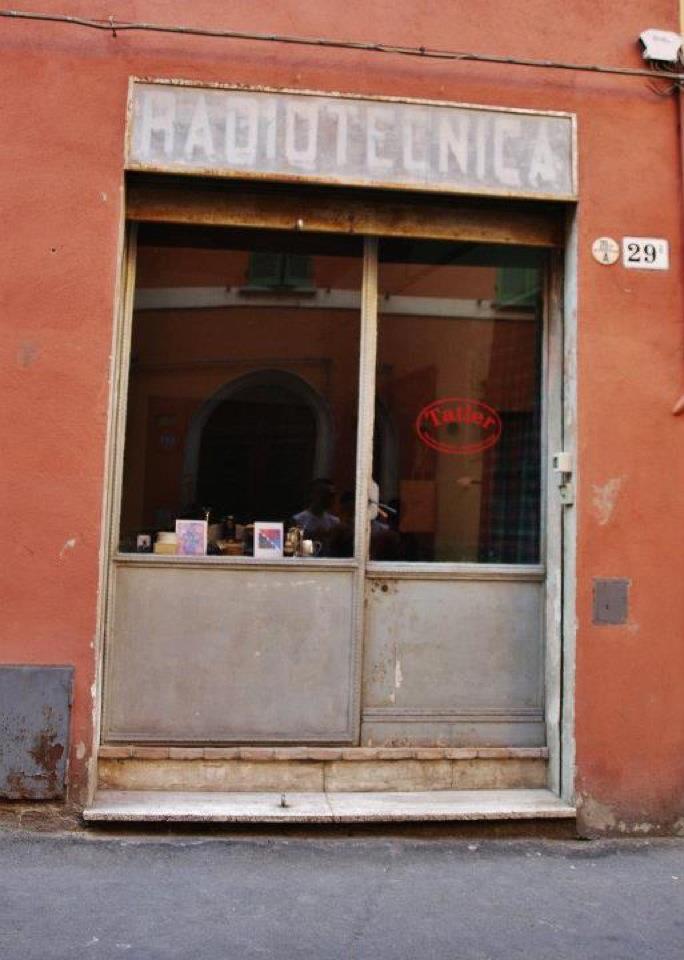
Tatler Perfumery. Bologna


Gianfranco: “When I decided to open Tatler, I didn’t say anything to anyone. I didn’t ask for advises. I didn’t want them. You know, people are generous with advises and some of them are actually punctual and right … so inevitably you start thinking about them and … The think is that I wanted to make my own mistakes and to do exactly what I wanted to do. A place where to meet new people and old friends, a place to share. Fragrances work just as trait d’union to link all my interests, and this is probably why I chose them, because they can go well with anything, art, people, books…”
Gianfranco: “All sort of people come to Tatler. Business man as well as young people who are still studying or have just got a job (or lost it). We talk, about life, about the current situation in Italy, about ideas. Someone asks me for advises. What I personally think is that we should always try to fly high, to have strong ideas that guide us and to keep following them. And be honest with ourselves even when things are difficult to admit.”
Text by Valeria Racemoli, Photo by Claudia Falcomatà [Bologna] // 24.06.2012

Other Photos / http://www.facebook.com/?ref=tn_tnmn#!/tatler.perfumery?fref=ts


Da sinistra: Luca Zarattini, Eleonora Sole Travagli e Gianfranco Salomoni.


Thursday, 23 May 2013

Paul Smith ...


 Paul Smith’s introduction into fashion was completely accidental.

At the age of 16, with no career plans or qualifications, Paul Smith was propelled by his father into a menial job at the local clothing warehouse in his native Nottingham. However his real passion was sport and his ambition was to become a professional racing cyclist, until aged 17 years when cycling-mad Paul was in a terrible accident.

Six months in hospital followed and during this time Paul made some new friends. After leaving hospital he arranged to meet them again and by chance the meeting place was a local pub that was popular with the students from the local art college.

They talked of Mondrian, Warhol, Kokoshka, David Bailey and listened to the Rolling Stones, Miles Davis and much more. It was then Paul knew he wanted to be a part of this colourful world of ideas and excitement.

Within two years, Paul Smith was managing his first boutique in Nottingham and with the encouragement of his girlfriend Pauline Denyer (now wife) and a small amount of savings, opened a tiny shop in 1970. Paul started to take evening classes for tailoring and with the help of Pauline (an RCA fashion graduate), Paul was able to create what he wanted. By 1976 Paul showed his first menswear collection in Paris under the Paul Smith label.

In business for over 40 years Paul Smith had established himself as the pre-eminent British designer. Paul Smith has an ability to anticipate, and even spark off trends not only fashion but in the wider context of popular culture. He manages to transmit a genuine sense of humour and mischief mixed with his love of tradition and the classics

Today there are 14 different collections; Paul Smith for men and women, PS by Paul Smith, Paul Smith Jeans, Paul Smith London, R.Newbold (Japan only), Paul Smith Black, Paul by Paul Smith, Paul Smith Accessories, Paul Smith Shoe. Paul Smith rugs, china, spectacles and fragrance are made under license. Designed in Nottingham and London, the Paul Smith collections are primarily produced in England and Italy while the fabrics used are mainly of Italian, French and British origin.

The Paul Smith shops reflect the character of Paul and his designs, an unmistakable Englishness augmented by the unexpected. Each and every Paul Smith shop is totally different, from a shocking pink building with movie set styling on Melrose Avenue, LA, to a Japanese garden at the heart of the Jingumae store in Tokyo. Each shop is a showcase for diverse and eccentric objects complementing the clothing collections with an extensive selection of jewellery, books, art and antiques.

Paul explains his eclectic aesthetic: “We’re a leading and uniquely British brand. We mix up one-off antiques with high quality tailoring: the chair you sit on when you buy a suit is for sale and we can wrap the suit and have the chair waiting for you when you get home.”

Paul Smith is global - the collection is wholesaled to 66 countries and has 17 shops in England. Paul Smith shops are found in London, Paris, Milan, New York, San Francisco, Los Angeles, Antwerp, Hong Kong, Singapore, Taiwan, Korea, U.A.E. – and over 200 throughout Japan. Paul remains fully involved in the Japanese business; designing the clothes, choosing the fabrics, approving the shop locations and overseeing every development within the company. Paul Smith also has impressive and diverse showrooms in London, Paris, Milan, New York, and Tokyo.

Paul Smith continues to be an integral part of the company; he is both designer and chairman. Paul Smith is continually involved in every aspect of the business and as a result, Paul Smith Limited retains a personal touch often lost in companies of a similar size.
http://www.paulsmith.co.uk/company/


1946
Paul Smith is born

1970
First shop opened at 10 Byard Lane, Nottingham

1976
First Paul Smith collection shown in Paris

1979
First London shop opens at 44 Floral Street, Covent Garden, WC2

1982
Second London shop opens at 23 Avery Row, London, W1

1983
Third London shop opens at 43 Floral Street, Covent Garden

1984
Paul Smith Ltd. signs license contract with Japanese company, C.Itoh

1986
Paul Smith toiletries collection launched

1987
First shop opens in New York, 108 Fifth Avenue, NY

1987
Fourth London shop opens at 41/42 Floral Street

1989
London showroom opens at 7/8 Langley Court, London WC2

1990
Paul Smith franchise shop opens in Hong Kong

1991
Paul Smith Childrenswear Launched (January)

1991
Paul Smith receives British Designer for Industry Award

1991
Paul Smith receives BKCEC award (November)

1991
Flagship shop opens in Tokyo making a total of 60 shops in Japan

1992
Showroom/Press office opens in Paris (May)

1992
Showroom/Press office opens in Milan (July)

1993
Paul Smith launches Accessories collection

1993
Shop opens in Paris at 22 Blvd Raspail, 75007 (January)

1993
Autumn/Winter 1993 collection is shown in Florence, as guest of Pitti Immagine (January)

1993
Covent Garden shops extended to include “The British Room”, a shoe shop and children’s wear

1993
Shop opens in Singapore (April)

1993
First R. Newbold store opens in London at 7/8 Langley Court, W1 (September)

1993
Launch of the first Paul Smith Women collection (Spring/Summer 1994) (October)

1994
First Paul Smith Women shop opens in Paris, at 22 Boulevard Raspail, 75007 (January)

1994
Autumn/Winter 1994 collection is shown in Cologne, as guest of Kölnmesse (February)

1994
Second Paul Smith Women shop opens at 40 Floral Street (February)

1994
Launch of Paul Smith Spectacles collection (February)

1994
Launch of Paul Smith Luggage collection (April)

1994
First PS.Paul Smith Jeans shop opens at 9/11 Langley Court (September)

1994
First Paul Smith for Children shop opens at 44 Floral Street (September)

1994
Spring/Summer 1995 collection is shown in Barcelona, as guest of Gaudi Barcelona (September)

1994
Launch of Paul Smith Watch collection (October)

1995
Paul Smith Limited awarded The Queens Award for Industry for export achievement (April)

1995
Launch of men’s underwear line (Spring/Summer)

1995
Observation display at the Victoria & Albert Museum (June - November)

1995
Paul Smith True Brit book published by Conde Nast Italia to coincide with exhibition (October)

1995
Paul Smith True Brit exhibition at the Design Museum in London (October 95 - April 96)

1995
Paul Smith website goes on line (October)

1996
Paul Smith True Brit exhibition in Glasgow as part of Festival of Design (September)

1996
Exhibition of ‘Uniforms’ by Steve Pyke in the R Newbold Gallery (26 September - 5 October)

1996
Third PS Paul Smith Jeans store opens at 66-68 Bridge St, Manchester (October)

1996
Exhibition of ‘Parking Allotment’ by Max Jourdan in the R.Newbold Gallery (6-16 November)

1996
Paul awarded the Honorary Freedom of the City of Nottingham (February)


 1997
Paul Smith True Brit exhibition at the Nottingham Castle Museum (15 May - 31 August)

1997
Paul Smith Women shop opens at Sloane Avenue, SW3 (3 September)

1997
Shop opens in Lee Gardens, Hong Kong (29 August)

1997
Exhibition in R. Newbold Gallery by photographers 664 entitled ‘Boys’ (8-22 October)

1997
Exhibition in R.Newbold Gallery by Mike North entitled ‘Into The Dee’ (3-21 November)

1997
Shop opens in Manila, The Philippines (November)

1997
Exhibition in R Newbold Gallery by Unit 2h entitled ‘Advent’ (1-24 December)

1998
Paul Smith Women first catwalk show (London Fashion Week - 24 February)

1998
Launch of Paul Smith Mini ‘Art Car’ available in the UK and Japan only (April)

1998
Westbourne House opens at 122 Kensington Park Road, London (9 May)

1998
A bespoke tailoring service is offered for the first time at Westbourne House (9 May)

1998
Paul Smith True Brit exhibition travels to Japan (Tokyo, Kobe and Fukuoka)(September)

1998
Portrait of Paul Smith by James Lloyd unveiled at the National Portrait Gallery (December)

1998
Paul Smith Ltd. signs footwear collection agreement with Overland Group (December)

1998
Paul Smith Ltd. and Inter Parfums SA sign a 12 year licensing agreement (December)

2000
Launch of ‘Paul Smith Men’ and ‘Paul Smith Women’ fragrances (June)

2000
Paul Smith awarded a knighthood by HM the Queen (24 November)

2001
Shop opens in Milan, at Via Manzoni 13 (February)

2001
Accessories shop opens opposite Westbourne House (September)

2001
An additional floor opens at Floral Street shop stocking women’s collections (September)

2001
Launch of Paul Smith rug collection for the Rug Company (September)

2001
Publication of the book ‘You Can Find Inspiration in Everything…’ (October)

2001
Shop opens in the Royal Exchange, London City (November)

2002
New York showrooms open at 121 Greene Street, NY 10012 (January)

2002
Shoe shop opens in London at 44 Floral Street (February)

2002
Shoe shop opens in Paris at 24 Boulevard Raspail, 75007 (April)

2002
Launch of Paul Smith line of furniture for Cappellini (April)

2002
Shop opens at Heathrow, Terminal 3 (May)

2002
Launch of ‘Extreme’ men and ‘Extreme’ women fragrances (October)

2002
Paul Smith opens the first free standing Women’s shop in Japan, stocks Blue, Black, Pink and Accessories. Its location is in the Aoyama Area, exactly Minami Aoyama. (October)

2003
London showrooms and headquarters open at 20, Kean Street, WC2B 4AS (January)

2003
Milan showrooms and headquarters open at Viale Umbria, 95 (January)

2003
Launch of Swiss-made Watch collection (January)

2003
Paul Smith judges at the Design Museum ‘Designer of the Year Award’ (June)

2003
Paul Smith wins ‘Men’s wear Designer of the Year’ and ‘Women’s Contemporary Designer of the Year’ at the British Style Awards (September)

2003
Launch of the ‘Furniture and Things’ collection (September)

2003
Launch of ‘Bespoke’, a Paul Smith upholstery textile for Maharam (November)

2003
Publication of paperback edition of ‘You can find inspiration in everything…..’ (November)

2003
Launch of the PS30 Watch (December)

2004
Launch of Paul Smith London fragrances for men and women (July)

2004
Launch of Swiss-made women’s Watch collection (September)

2004
Shop opens in mainland China, Plaza 66 mall on Nanjing Road

2004
Shop opens In Hong Kong at the Landmark, the Central District

2004
Shop opens in Tawain in the Breeze Centre Taipei

2004
Franchise opens in Thailand The Emporium Mall, Bangkok

2004
Franchise opens in Kuala Lumpur in KLCC Mall.

2005
Flagship shop opens in Nottingham Willoughby House, 20 Low Pavement, Notts NG1 7EA

2005
Shop opens in Beijing China, Oriental plaza mall, No.1 East Chang An Street (February)

2005
Paul Smith won the 'Great Britons Award for Business' at the Great Britons '04 event organised by Morgan Stanley, RSA in association with the Daily Telegraph

2005
Paul Smith opens Paul Smith Pink + , his first Women's 'Pink' shop in the Daikanyama area of Tokyo, Japan

2005
Paul Smith collaborates with Triumph motorbikes, customizes nine bikes and designs a capsule clothing and accessories collection

2005
Paul Smith collaborates with Burton Snowboards to design an exclusive bespoke stripe snow board jacket and pant

2005
Paul Smith launches a new women’s fragrance, ‘Floral’

2005
Paul Smith opens Furniture and Things shop in Mayfair, 9 Albemarle St, London (October)

2005
Paul Smith opens first shop in Melrose Ave, LA

2005
Paul Smith opens his second shop in Dubai (November)

2006
Paul Smith opens Jeans shop in London’s Borough Market (January)

2006
Paul Smith opens three shops in Japan – Kyoto, ‘Happy’ & ‘Peace’ (January-March)

2006
Paul Smith opens flagship shop in Tokyo, Japan. ‘Space’ (April)

2006
Paul Smith opens flagship shop in New York, 142 Greene Street (October)

2006
Paul Smith launches new men’s fragrance Paul Smith STORY

2006
Paul Smith collaborates with Mercian Bikes, personalising a Track and Tour bike

2006
Paul Smith opens a shop in Moscow’s Red Square, Russia (October)

2006
Paul Smith opens flagship shop in Paris, Rue Faubourg St Honore (October)

2007
Paul Smith opens new Men’s shop in Kanazawa, Japan

2007
Paul Smith is awarded Honorary Fellowship of RIBA – Royal Institute of British Architects


A conversation with Paul Smith:
http://www.class-of-its-own.com/2012/09/fashion-paul-smith/