Prince
Andrew planning tell-all autobiography to 'fix reputation'
Prince
Andrew reportedly plans to write an explosive tell-all autobiography. The Duke
of York wishes to write the book to fix his reputation, according to reports.
But friends
have warned he risks looking "stupid". Andrew wants to launch a
memoir after Prince Harry's Spare was released back in January of this year.
An insider
said: “Everyone close to him is telling him it’s a stupid idea and he should
just forget it.” The source told the Sun newspaper: “Andrew was the original
spare and there’s plenty of material. Compared to Harry, he has a far greater
depth of history to draw from.
“Writing a
book would give him the opportunity to fully explain his association with
Jeffrey Epstein and the resulting fall-out." It comes after Andrew was
reportedly told to move out of Royal Lodge and move into Frogmore Cottage
instead, with Prince Harry and Meghan Markle vacating the property.
DON’T MESS WITH MICHELANGELO: A school board in
Florida made news last week after forcing out a principal for showing
Michelangelo’s David to her art students — after complaints from parents that
it was “pornography.” On Saturday, the mayor of Florence, Dario Nardella, shot
back at the “ridiculous” decision: “I will personally invite the teacher to
Florence to give her a recognition on behalf of the city,” Nardella tweeted.
“Art is civilization and those who teach it deserve respect.”
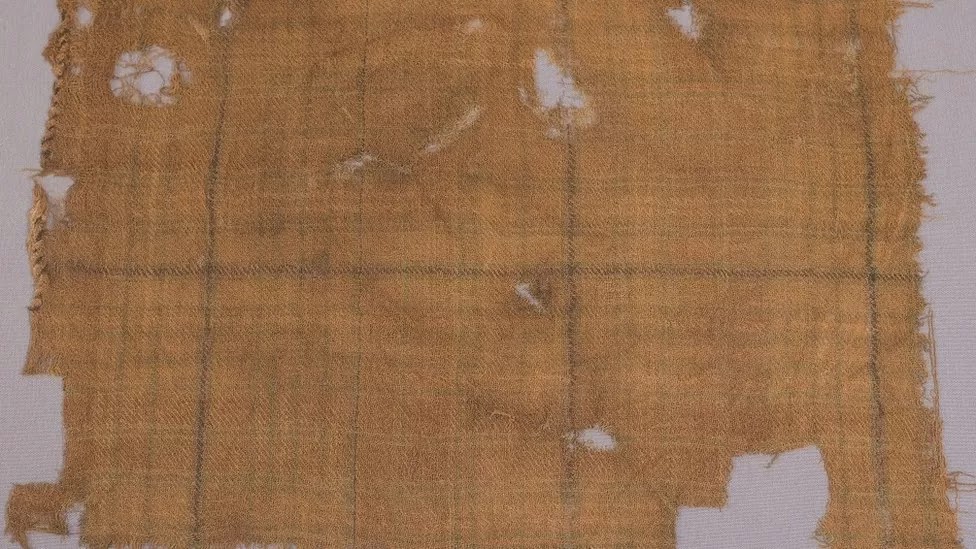
A scrap of
fabric found in a Highland peat bog 40 years ago is likely to be the oldest
tartan ever discovered in Scotland, new tests have established.
The fabric
is believed to have been created in about the 16th Century, making it more than
400 years old.
It was
found in a Glen Affric peat bog, in the Highlands, in the early 1980s.
The
Scottish Tartans Authority (STA) commissioned dye analysis and radiocarbon
testing of the textile to prove its age.
Using high
resolution digital microscopy, four initial colours of green, brown and
possibly red and yellow were identified.
The dye
analysis confirmed the use of indigo or woad in the green but was inconclusive
for the other colours, probably due to the dyestuff having degraded.
No
artificial or semi-synthetic dyestuffs were involved in the making of the
tartan, leading researchers to believe it predates the 1750s.
Experts
have said the tartan was more than likely worn as an "outdoor working
garment" and would not have been worn by royalty.
The STA
said the textile was created somewhere between 1500 and 1655, but the period of
1500 to 1600 was most probable.
This makes
it the oldest known piece of true tartan discovered in Scotland.
Four
initial colours of green, brown and possibly red and yellow were identified in
the tartan
Peter
MacDonald, head of research and collections at the STA, said the testing
process took nearly six months but that the organisation was "thrilled
with the results".
"In
Scotland, surviving examples of old textiles are rare as the soil is not
conducive to their survival," he added.
"The
piece was buried in peat, meaning it had no exposure to air and it was
therefore preserved."
He said
that because the tartan contains several colours, with multiple stripes, it
corresponds to what would be considered a true tartan.
Mr
MacDonald said: "Although we can theorise about the Glen Affric tartan,
it's important that we don't construct history around it.
"Although
Clan Chisholm controlled that area, we cannot attribute the tartan to them as
we don't know who owned it."
Historical significance
He also
said that the potential presence of red, a colour that Gaels consider a status
symbol, is interesting because the cloth had a rustic background.
"This
piece is not something you would associate with a king or someone of high
status, it is more likely to be an outdoor working garment," he added.
John
McLeish, chair of the STA, said the tartan's "historical significance"
likely dates to the reigns of King James V, Mary Queen of Scots or King James
VI/I - between 1513 and 1625.
Due to
where it was found, the piece of fabric has been named the Glen Affric tartan
and measures about 55cm by 43cm (approximately 22 by 17 inches).
It will go
on public display at the V&A Dundee design museum from 1 April until 14
January next year.
James
Wylie, curator at V&A Dundee, said: "We knew the Scottish Tartans
Authority had a tremendous archive of material and we initially approached them
to ask if them if they knew of any examples of 'proto-tartans' that could be
loaned to the exhibition.
"I'm
delighted the exhibition has encouraged further exploration into this plaid
portion and very thankful for the Scottish Tartans Authority's backing and
support for uncovering such a historic find."
He added
that it was "immensely important" to be able to exhibit the Glen
Affric tartan and said he was sure visitors would appreciate seeing the textile
on public display for the first time.
What's On
Story of tartan through the centuries to unfold in
V&A Dundee exhibition
It has been woven into Scottish culture and identity
for centuries.
Now Scotland’s national museum of design is to stage
the biggest ever celebration of tartan and its global impact.
Billed as “a radical new look at one of the world’s
best-known fabrics,” the V&A Dundee show, which opens in April 2023, will
also “tell the story of Scotland through tartan.”
The five-month exhibition will explore how the
patterned fabric – famously embraced by designers like Vivienne Westwood and
Alexander McQueen, the author Walter Scott and musical acts like Rod Stewart
and the Bay City Rollers – has shaped, influenced and been reflected in
advertising, fashion, film and fine art.
However it will examine how tartan has been both
“adored and derided,” been seen as a symbol of being radical and rebellious for
centuries, and is still making its mark around the world in modern times.
The exhibition will also explore the “sometimes
painful” history of tartan, which was famously outlawed in Scotland following
the defeat of the Jacobites at the Battle of Culloden in 1746, but would go on
to become a symbol of the British Army and Empire, and embraced by the Royal
Family.
It first major in-house exhibition, which has been
announced four months after the attraction secured national status and an extra
£6 million in funding from the Scottish Government, will be staged nearly five
years after the museum was unveiled.
V&A Dundee director Leonie Bell said: “Tartan is a
ubiquitous and universally recognised fabric of Scotland, which is loved and
loathed in equal measures, but lives on into new interpretation all the time.
It is seen as a cliche, but is also seen as a really interesting fabric for
contemporary designers.
“We're going to be telling its full design story for
the first time – we don’t think any other exhibition has done that before. We
will be looking at its history of attachment to tourism, tradition and the
clans, how it was used across the Empire, how it has been subverted by punks
and fashion designers, and how it has endured from quite simple beginnings to
be something that is recognised by everybody.
“We will be going back as far as we can. It’s an
ancient fabric that has not really changed very much but has continually been
adapted again and again by people in all kinds of different sectors.
“It’s really fascinating when you start to get under
the skin of it and you realise it’s something that we live with in Scotland all
the time but maybe don’t understand the true story of it and the potency it
still has – as a cloth that can be about being radical and rebellious, but also
about tradition.
"It’s really interesting that the Tartan Army can
own it at the same time as Vivienne Westood. It transcends ownership in a way
that no other fabric does.
"The exhibition will be deeply about Scotland and
our understanding of identity. But it will also be very much about V&A
Dundee opening up to the world again in a way that we’ll probably be a
tentative about this year and into 2022. It will tell the story of Scotland
through tartan, but it will have a real internationalism to it as well.”
EXHIBITION
My ancestor modelled our tartan when George IV
came to town
A show dedicated to tartan and its history opens next
month at the V&A Dundee. Ben Macintyre considers its social and political
significance and investigates his family’s relationship with the cloth
Tartan is
tricky. It is the world’s most recognisable textile and pattern but also a
subject of intense and intractable dispute: a national dress and a symbol of
servitude, a fashion staple and a political statement, simultaneously
traditional and rebellious, uniquely Scottish but wholly international, a
fabric that unites and divides.
This
tangled legacy has been teased apart by the V&A Dundee in a new exhibition
devoted to tartan: the story behind the kilt.
Some insist
that tartans are the visual index of the ancient Scottish clan system. Others
argue, just as passionately, that the idea of clan tartans was a 19th-century
socio-political invention, and largely bogus. A generation ago, the kilt was
often seen as posh attire for sassenachs and foreign-born would-be Scots; today
it is practically de rigueur at Scotland rugby matches, the chosen uniform of
the Tartan Army football supporters’ club. In some Scottish nationalist circles
it is a reminder of colonial (English) oppression; for others, equally
nationalist, it represents independence itself.
Tartan was
banned in the 18th century as a symbol of Jacobite sympathies. Less than a
century later it came triumphantly back into vogue, partly thanks to one of my
Macintyre ancestors: the first, and last, fashion model in the family.
Tartan is
now ubiquitous and trans-national, inspiring architecture, graphic and product
design, photography, furniture, glass and ceramics, film and art. But above all
clothing: Chanel, Dior, Alexander McQueen, Vivienne Westwood and Comme des
Garçons have all adopted and adapted tartan in various ways, along with contemporary
designers such as Grace Wales Bonner, Nicholas Daley and Olubiyi Thomas.
Tartan
wearers range from monarchs to the Sex Pistols, from the Doctor in Doctor Who
to the Bay City Rollers. Idi Amin, self-styled Last King of Scotland, went
through a tartan phase. Tartan has been deployed for political purposes by
Bonnie Prince Charlie, George IV, Sir Walter Scott, the Windsors, and on Nicola
Sturgeon’s Covid facemask. Hollywood dressed Mel Gibson in tartan as William
Wallace in Braveheart. A fragment of the MacBean tartan was carried aboard
Apollo 12 by the American astronaut Alan Bean.
I wear a
kilt to weddings, christenings and parties in Scotland. My children started
wearing kilts soon after they were born. The kilt-over-the-nappy look is
particularly endearing.
There are
three different Macintyre tartans: the dress tartan (a gaudy red); the ancient
tartan (which is no more ancient than any other invented tartan); and the
hunting tartan (in darker green, supposedly because prey was likely to spot the
brighter coloured kilt fabric and run away). My branch of the clan wears the
hunting tartan. I have no idea why.
Some clans
went a step further and invented a “mourning” tartan, using the existing
pattern of stripes and squares but in funereal black and white. Queen
Victoria’s long mourning for Prince Albert was largely responsible for this
craze.
Tartan is
produced with alternating bands of coloured thread woven at right angles, both
the warp and weft, producing a vast number of colour combinations and
symmetrical patterns. The identifying sequence of each individual tartan is
known as a “sett”. No one knows where tartan began, but since the earliest and
simplest form of weaving using two colours of wool produces a checked pattern,
it came from everywhere, and nowhere.
Even the
origin of the word is debated. It is probably derived from the French
tiretaine, and its Spanish equivalent tiritana, meaning a blend of linen and
wool. But it may equally derive from tartarin meaning “Tartar cloth”,
suggesting inspiration in central Asia, or the Gaelic word tarsainn, meaning
“across”.
“Tartan”
leggings were found on a 3,000-year-old mummy in the deserts of Xinjiang in
China; he didn’t buy them in Dundee. Today anyone can design their own sett,
and by applying to the Scottish Tartans Authority (and paying a fee) get it
registered in the record of officially approved tartans.
The
invading Romans appear to have encountered Highlanders wearing brightly
coloured cloth. In the 1690s Martin Martin of Skye wrote: “The plaid wore only
by the men is made of fine wool. It consists of divers colours: and there is a
great deal of ingenuity required in sorting colours so as to be agreeable to
the nicest fancy.”
The
earliest surviving Scottish example is the Falkirk Tartan, a fragment of cloth
dating from the 3rd century AD, used as the stopper for an earthenware vessel
containing a hoard of silver coins discovered in 1934. It is more checked than
tartan, two shades of natural wool, one light brown the other greenish, as warp
and weft.
Early
tartans did not denote clanship so much as geography, the colours reflecting
whatever natural dyes were available in the different regions of Scotland. The
early plaid, fhéilidh-Mor in Gaelic, was not a kilt as it would be recognised
today but a length of woven cloth, some six yards long and two wide, that was
wrapped around the body and belted at the waist, easily converted into a rustic
sleeping bag at night. Early depictions of tartan suggest these were worn in a
profusion of different patterns, some asymmetrical, often denoting fealty to a
particular overlord rather than kinship.
It was not
until the Act of Union of 1707, uniting Scotland and England and ensuring the
Hanoverian succession, that tartan turned political. Wearing the kilt became an
expression of Scottish nationalism, Jacobite sympathy and support for the
Stuart cause. The Jacobite rebellions of 1715, 1719 and 1745 were
metaphorically and often literally clad in plaid. The tartanised Bonnie Prince
Charlie still found on Scottish shortbread tins is wearing the clothes of
rebellion, a direct sartorial Stuart challenge to the Hanoverian dynasty.
After the
Jacobite defeat at Culloden, the Disarming Act of 1746 banned the wearing of
Highland dress, including tartan, as part of a systematic attempt to eradicate
remaining opposition to English rule. Some were exempt from the ban, notably
the Highland regiments of the British army raised by the Hanoverian crown.
Tartan went underground: Jacobite sympathisers still wore it, and secretly had
themselves painted wearing it. Confusingly, the fabric became a symbol of both
repression and rebellion, depending on the sympathies of the wearer.
But in
1822, less than 80 years after it was outlawed, tartan came back with a
flourish, with the help of Sir Walter Scott, George IV and, in a small but
significant way, my ancestor Peter Macintyre.
George IV’s
state visit to Edinburgh in 1822 marked the first time a Hanoverian monarch had
set foot in Scotland since the uprisings. A show of national unity was called
for, a demonstration that the Scots were snappy dressers and not mere savages;
the person chosen to stage-manage this display was Scott, bestselling novelist,
president of the Celtic Society, and the inventor of a romantic conception of
Scotland that persists today.
Aided by
his technical adviser, Colonel David Stewart of Garth, Scott put on a dazzling
tartan extravaganza. As Jonathan Faiers, professor of fashion thinking at
Southampton University and consultant to the exhibition, puts it in his book
Tartan, Scott “consciously used tartan as a primary visual component of a
series of spectacular tableaux that succeeded in expressing, via clothing, a
counterfeit connection between the Celtic Royal Houses of Scotland and the
English Hanoverian line”.
The chiefs
and their clansmen were encouraged to turn out in full Highland regalia, “all
plaided and plumed in their tartan array”. The king himself was upholstered in
what became known as Royal Stewart tartan. And the person deputed to greet His
Majesty formally on landing at Leith was the leader of the Drummond
Highlanders, Peter Macintyre.
For this
purpose Macintyre got himself kitted out head to foot in an outfit he had
surely never worn before: tartan kilt, jacket, socks, a bonnet with an eagle’s
feather, and armed to the teeth with sword, dirk, shield and pistol. Even his
sporran top and garter flashes are in matching, hi-vis scarlet. No subdued
hunting tartan for this Macintyre. You can see him in most paintings of the
event, a bright red figure in peacock plumage stationed immediately behind the
king.
Soon after
the event, Macintyre was painted in his finery by the portrait artist James
Ramsay, on a vast canvas some 15ft high and 6ft across: a poster boy for the
new tartan fashion.
Tartan
became trendy. By the mid-century, a vast assortment of tartans were being
created and artificially linked with Scottish clans, families, individuals or
institutions who were (or wished to be seen as) associated with a glorious and
colourful Scottish heritage.
The most
influential promoters of the supposed links between specific tartans and the
ancient clans were the Sobieski Stuart brothers, who arrived in Scotland in the
1830s and set up their own Jacobite court, claiming to be the grandsons of
Charles Edward Stuart, the Young Pretender. In 1842 they published the
Vestiarium Scoticum based on an ancient manuscript and describing, in elaborate
detail, the historical antecedents of the various tartans dating back to 1571.
The
Sobieski Stuarts were fabulous frauds. They were Englishmen from Egham in
Surrey, the sons of a Royal Navy officer named Thomas Allen. Their book of
tartans was a strange mixture of make-believe, deliberate fakery and genuine
scholarship. They may not have been brothers but lovers, a pair of gay
Victorian fashionistas from Surrey who spotted in tartan a golden commercial
opportunity.
The claims
of the Sobieski Stuarts were comprehensively debunked during their lifetimes.
Even Walter Scott, while avid for all forms of an imaginary Scottish past,
pointed out that the “idea of distinguishing the clans by their tartans is but
a fashion of modern date”. With typical acidity, the historian Hugh
Trevor-Roper later described Vestiarium Scoticum as “shot through with pure
fantasy and bare faced forgery”.
But the
idea of clan-based tartans took permanent root. Demand for tartan exploded, and
ignited a tartan taxonomy craze among Victorians, with new chemical dyes,
romantic legends from Scottish history and a taste for social and familial
distinctions.
The German
Prince Albert of Saxe-Coburg and Gotha had a particularly acute case of
tartanophilia. Queen Victoria’s consort invented the Balmoral tartan, still
worn by the royal family, and decked out the castle in no fewer than three
(clashing) tartans: Royal Stewart and the green Hunting Stewart tartans for
carpets, and Dress Stewart for curtains and upholstery.
There is
still a certain sort of lip-curling Englishman, like Trevor-Roper, who cannot
resist pointing out that tartan kilt-wearing is an invented Victorian fad; but
that is to be blind to the power of myths, of which the Scots have many and the
English not enough. As Kirsty Hassard, the curator of the V&A exhibition,
points out: “The meaning of tartan is in the eye of the beholder.”
Peter
Macintyre rolled up his painting a few years after it was finished and departed
for Australia, never to return. I recently visited my cousins at their sheep
station in New South Wales, where the original portrait still hangs: a
long-forgotten 18th-century fashion plate to which every tartan-wearing punk
and tweed-clad royal owes a small debt.
Tartan is
at V&A Dundee from April 1 to January 14, 2024
Tartan: Revised and Updated - Textiles that Changed
the World
Professor Jonathan Faiers (author)
“An
outstanding and comprehensive contribution to the history of Tartan. -
Telegraph Featuring new insights and an additional chapter on masculinities,
this updated edition of Tartan revitalizes discussions about the fabric's
traditional, sentimental Highland origins and its deliberate subversion by
contemporary designers. Tartan's history has made it uniquely capable of
expressing both conformity and subversion, tradition and innovation. Through
positioning tartan within broader philosophical, political and cultural
contexts, from the tartan-clad Highland regiments and Queen Victoria's royal
endorsement, to the fabric's influence on Westwood and McQueen and a generation
of Japanese designers such as Watanabe and Takahashi, Jonathan Faiers traces
tartan's development from clanship to contemporary fashion and its enormous
domestic and global impact. Beautifully illustrated and weaving together a
story out of history, art, music, film and fashion, Tartan demonstrates that
this most traditional and radical fabric has become one of extraordinary
versatility and far-reaching appeal.”
Publisher:
Bloomsbury Publishing PLC
ISBN:
9781350193772
Number of
pages: 360
Dimensions:
246 x 189 mm
Edition:
2nd Revised edition
MEDIA
REVIEWS
An
outstanding and comprehensive contribution to the history of Tartan. *
Telegraph *
Intriguing
study ... mixes the serious with the saucy. * International Herald Tribune *
A rare
treat; a readable, enjoyable academic text. * Selvedge *
Enid Blyton novels being HIDDEN in libraries in
bizarre new woke driver
Enid Blyton's novels have been removed from library
shelves in Devon and stored in back rooms over concerns that the language used
in her books is "outdated" and could offend readers, despite the
council stating it has no policy on trigger warnings.
By HELEN
BARNETT
16:01, Sun,
Mar 19, 2023 | UPDATED: 16:44, Sun, Mar 19, 2023
Blyton's
700-plus collection have been removed from Devon library shelves
Enid
Blyton's famous novels are being kept from view in libraries for fear of
offending readers.
Uncensored
original versions of some of Blyton's 700-plus collection have been removed
from Devon library shelves and stored in back rooms to prevent the public
"stumbling upon" language that is "outdated".
Although
listed on the online library catalogue, readers can only get their hands on
earlier editions of the texts if they specifically ask librarians for them. At
this point they will be verbally given a trigger warning about the language
contained within.
This is
despite Devon County Council saying in a Freedom of Information request in
October it "does not currently have a policy regarding trigger warning or
content warnings".
In
documents, Devon County Council said: "Where popular books have language
that is increasingly outdated (Enid Blyton is the best example) we continue to
purchase new editions where publishers have updated the language within."
Enid Blyton
wrote hundreds of books in her career between 1922 and 1968. Her
internationally-admired works include the Famous Five, Secret Seven and Noddy,
and more than 600 million copies have been sold.
Dr Byrn
Harris, of the Free Speech Union, said he was “bemused” that Blyton’s famous
stories were being treated as “dangerous and subversive samizdat”.
He added:
“Public libraries obviously cannot stock everything, but by law they must
provide a ‘comprehensive and efficient’ service."
“Deliberately
holding back certain works and making them less accessible might fall short of
that standard, especially if the reasons for doing so are of dubious relevance
– for instance, because the librarian finds those works subjectively
offensive."
Blyton’s
older editions sit out of view with the autobiography of Tommy Robinson, the
founder of the English Defence League.
There are
also other unnamed texts which have been removed “following customer and/or
staff complaints”, the Telegraph reports.
Enid is a 2009 British
biographical television film first broadcast on 16 November on BBC
Four. Directed by James Hawes it is based on the life of children's
writer Enid Blyton, portrayed by Helena Bonham Carter. The film
introduced the two main lovers of Blyton's life. Her first husband
Hugh Pollock, who was also her publisher, was played by Matthew
Macfadyen. Kenneth Darrell Waters, a London surgeon who became
Blyton's second husband, was portrayed by Denis Lawson. The film
explored how the orderly, reassuringly clear worlds Blyton created
within her stories contrasted with the complexity of her own personal
life.
Helena
Bonham Carter on being Enid Blyton
"Appealing
and appalling." Helena Bonham Carter talks about how she was
drawn in by the writer’s creative fire – and her dark deeds.
There is a scene in Enid, the
BBC’s new biopic of Enid Blyton, where the children’s author,
played by Helena Bonham Carter, is asked by a radio journalist how
she maintains the balance between work and motherhood.
“Of course
children need their mothers,” she replies, before the camera cuts
away to show her two neglected daughters at home, listening to the
broadcast in a state of sombre bemusement. “Mothers are the heart
of any household. I try to spend as much time with my children as I
possibly can while also fulfilling my professional duties. It is
tricky, but I think I manage it.”
Bonham Carter
chuckles as she quotes these lines in our own interview in a London
members’ club. She has something of an affinity for Blyton and
thinks these words will do as her personal response to the same
question. Although, she concedes, her six-year-old son Billy may beg
to differ: “Bill threw my script to the opposite end of the room
just before I started filming, saying, ‘I like you but I don’t
like what you do ’cos it takes such a very long time.’”
It’s a coup, of
course, that the BBC has persuaded a film star of Bonham Carter’s
standing to appear in a low-budget biopic. “I did it for the
money,” she says with a grin, in a jest that is almost cruel. The
frenetic 15-day shoot suggests otherwise. The 43-year-old actress, a
one-time Oscar nominee for The Wings of a Dove, is more used these
days to working in the lavish Hollywood productions of her partner,
director Tim Burton. She has recently finished work on his Alice in
Wonderland adaptation, due for release in the spring, in which she
will play the Red Queen.
Bonham Carter is
perhaps the biggest name so far to join the honourable list of actors
who have starred in these TV one-offs. Ken Stott, David Walliams and
Anne Reid are among those that went before her. And coming after
Enid, completing a trio of films on idolised British women, will be
Jane Horrocks playing Gracie Fields and Anne-Marie Duff as Margot
Fonteyn. The salient feature of all these pieces – and the real
draw for such quality casts – has been the writing. “It’s sort
of ironic,” says Bonham Carter, “but I always find the better the
script the less money you have to do it and the less time.”
Blyton’s is a
corker of a story, and this is the first time it’s been turned into
a straight drama, after a drama documentary in the early 1990s. The
film’s director, James Hawes, is adamant that his feature is,
“Neither a hagiography nor a hatchet job”, although the woman
that scriptwriter Lindsay Shapero has created here would strike most
as first and foremost a vindictive egotist.
Early and sudden
fame in the 1920s (“She was the JK Rowling of her day – and then
some,” says Hawes) went quickly to Blyton’s head and she soon
lost interest in her downtrodden publisher husband, Hugh Pollock
(played here by Matthew Macfadyen). She struggled to bond with her
younger daughter, Imogen, whomshe left to scream in her cot. “She
put the baby in a cupboard and carried on writing and it all fell
apart,” as Bonham Carter neatly summarises.
Although both
parties were adulterous Blyton persuaded Pollock to take the rap when
they divorced, on the promise he would have unlimited access to the
children – then refused to let him see them again, telling everyone
her second husband, surgeon Kenneth Waters, was their father. She
then contacted the major London publishers and used her literary
clout to get Pollock blacklisted, so destroying his career. She also
pretended her mother was dead because she hated her so much. There’s
more, but too much will spoil the story.
The film was made in
consultation with Blyton’s main biographer Barbara Stoney and
Imogen, the surviving daughter, and the essential facts are easy to
corroborate. It doesn’t even venture into the terrain of her
possible lesbian affair, which received press attention a few years
ago when Pollock’s second wife Ida went public with her own version
of why Blyton’s first marriage collapsed.
But just as over the
decades public opinion of the literary skills of the creator of
Noddy, the Famous Five and around 750 further titles has yo-yoed, so
Blyton can’t be painted only as unpleasant. The biopic encourages
our sympathy through its depiction of Blyton’s difficult childhood:
her father, a cutlery salesman, abandoned the family when she was 13.
Her uterus stopped growing at the same age and, at the time, it was
thought that this could prevent her having children. The parental
trauma is a key reason why Bonham Carter herself finds the author
“appealing as well as appalling”.
“Her writing was
possibly a response to her father leaving her,” she explains. “That
sort of painful encounter with reality meant that she wrote a world
that was much more comfortable. My father fell really chronically ill
when I was 13 and that’s when I phoned up an agent and started to
act. So I had a very similar response and have always had great
comfort from living imaginatively.”
But surely all
Blyton’s deceits regarding her own family – she once pretended
her dog was still alive when it wasn’t; she eulogised her
womanising father – they’re not living imaginatively, they’re
pathological fantasy? “Yes, her fantasy was so divorced from
reality she was virtually insane,” says Bonham Carter. “It is
very hard to have that creative force married to a totally sane
brain.”
Bonham Carter
couldn’t be more different from Blyton in real life. Demonstrating
her customary disregard for fashion, the flouncy, lacy, multilayered
get-up she wears for the interview includes bloomers, while her hair
is a bird’s nest of a quality that any member of the Famous Five
would be proud to discover. She looks about 25 and engages with
candour with nearly every subject thrown at her. She says she only
read a little Blyton growing up “but I’m reading Noddy to Billy
now whether he likes it or not,” she laughs (she has another child,
Nell, but she’s too young even for Blyton).
“And he does like
it,” she adds. “All the things people criticise her for, such as
repetitive language, he loves it, it makes it really easy to read.”
She points out that all the racism that so bothered detractors during
Blyton’s critical nadir in the Seventies has been taken out these
days, and the sexism doesn’t seem too bad.
“When you write
for very young children what they want is something familiar and safe
and stereotyped. They want to know where they are… Lots of subtle
and very intelligent friends of mine say, ‘Thank God for Blyton,
she brought me up.’”
Blyton, whose books
still sell around 8 million a year, is having a resurgence generally
at the moment. Last year a survey found her Britain’s most popular
author. The ex-Children’s Laureate Anne Fine recently made a Radio
4 programme in her defence. So she’s not the hate figure she once
was. Enid comes out at an apposite time then, although, despite
Bonham Carter’s defence of her, the film is unlikely to further
endear the author to the nation.
New
TV drama reveals Enid Blyton as a barking-mad adulterous bully …
On paper, the world
of Enid Blyton was one populated by happy, carefree children whose
idea of bliss at the end of an adventure-filled day was a slice of
plum cake washed down by lashings of ginger beer.
The setting was an
idyllic Britain, one of thatched cottages and lych gates, a fairytale
time, in an age of innocence.
But the creator of
Noddy, the Famous Five, the Secret Seven and Malory Towers was in
truth a cold-hearted mother and a vindictive adultress who set out to
destroy her former husband.
Barking mad: Enid
Blyton will be played by Helena Bonham Carter (right) in a new
television drama
The darker
revelations, which will dissolve the image of Blyton conveyed by her
753 much-loved books, are part of a brilliant new television biopic,
starring Helena Bonham Carter as the author.
At first glance,
Blyton's life seems unlikely material for gripping drama, as much of
it consisted of her sitting at a desk, knocking off 10,000 words a
day. Her books sold 600million copies around the world and made her
extremely rich and famous. Her works still sell eight million copies
a year.
But Blyton's home
life at her cottage, Old Thatch, near the Thames at Bourne End, then
at Green Hedges, a mock-Tudor house in Beaconsfield, was nothing like
as idyllic as the picture she tried to create.
In spite of the
children's nursery, crumpets for tea, Bimbo the cat and Topsy the
dog, all foisted on the public in convenient photocalls to project
the Blyton brand, the truth was more conflicted.
Enid Blyton pays a
visit to Victoria Palace in 1958 to meet some of the young artists
who will portray her characters in Noddy In Toyland
Fairytale time: The
author pays a visit to Victoria Palace in 1958 to meet some of the
young artists who will portray her characters in Noddy In Toyland
Children's
favourite: Blyton's Famous Five books are still delighting young
readers across the world
'Enid's
self-awareness was brilliant and she was incredibly controlling,
too,' explains Bonham Carter. 'I was attracted to the role because
she was bonkers. She was an emotional mess and quite barking mad.
'What I found
extraordinary, bordering on insane, was the way that Enid reinvented
her own life. She was allergic to reality - if there was something
she didn't like then she either ignored it or re-wrote her life.
'She didn't like her
mother, so let her colleagues assume she was dead. When her mother
died, she refused to attend the funeral. Then the first husband
didn't work out, so she scrubbed him out.
'There's also a
scene in the film where her dog dies, but she carries on pretending
he's still alive because she can't bear the truth.'
Emotionally, Blyton
remained a little girl, stuck in a world of picnics, secret-society
codes and midnight feasts. It acted as a huge comfort blanket.
Many of Blyton's
obsessions can be traced to her father, who left her mother when Enid
was 12. She then seized up emotionally and physically.
'It was my job to
understand how she became like this in the first place, not to judge
her,' explains Bonham Carter.
'When Enid consulted
a gynaecologist about her failure to conceive, she was diagnosed as
having an immature uterus and had to have surgery and hormone
treatment before she could have children.'
Cold-hearted mother:
Blyton with her daughters Gillian and Imogen
The irony was that
when she finally did have two daughters, Gillian and Imogen, with her
first husband, Hugh Pollock, she was unable to relate to them as a
normal mother.
She loved signing
thousands of letters to her 'friends' the fans, encouraging them to
collect milk bottle tops for Great Ormond Street Hospital to help the
war effort, and even ran a competition to name her house, Green
Hedges.
But her neighbours
said Blyton used to complain about the fearful racket made by
children playing.
She was distant and
unkind to her younger daughter Imogen and there was clear favouritism
in the way she privileged her elder daughter Gillian, who died two
years ago aged 75.
Imogen Smallwood,
74, says: 'My mother was arrogant, insecure and without a trace of
maternal instinct. Her approach to life was childlike, and she could
be spiteful, like a teenager.'
Although Imogen
prefers to remain private, she did visit the set to advise Bonham
Carter. 'We had email correspondence before Imogen visited the set.
We agreed that I wasn't going to try to impersonate her mother
because this is a drama,' says Helena.
'Imogen is
sensitive, but was very supportive and gave me a few tips, such as
how her mother did everything at immense speed because she was ruled
by the watch. Enid's domestic life was seen as an interruption to her
writing, which was her escapism.'
There is a poignant
scene in the film where Blyton holds a tea party at home for her
fans, or 'friends' as she preferred to call them. But her daughters
are banished to the nursery.
'Enid is one of the
kids at the Famous Five tea parties - the jelly and ice-cream are as
much for her as they are for her fans,' explains Helena.
'It's also
significant that when her daughters go to school, a large mannequin
of Noddy - her new child - arrives in the hall to take the place of
the children.'
Blyton's first
husband, Hugh, called her 'Little Bunny' and adored her. He helped
launch her career after they met when he was her editor at Newnes,
the publisher.
Blyton's first book,
Child Whispers, a collection of poems, was published in 1922. She
wrote in her diary soon after meeting him: 'I want him for mine.'
They were married
for 19 years, but as Enid's career took off in the Thirties, Hugh
grew depressed and took to nightly drinking sessions in the cellar
while Enid managed to fit affairs in between writing.
The marriage
deteriorated and Hugh moved out. She mocked him in later adventure
stories, such as The Mystery Of The Burnt Cottage, as the clueless
cop, PC Theophilus Goon.
After a bitter
divorce, she married surgeon Kenneth Darrell Waters, with whom she
had a fulfilling sex life.
Although the drama
shows Blyton's flirtatiousness - she entertained servicemen to dinner
at the house while her husband was away at war and found them and
their attention attractive - directors chose to omit some aspects of
Blyton's apparently sensual side, such as visitors arriving to find
her playing tennis naked and suggestions of a lesbian affair with her
children's nanny, Dorothy Richards.
But the drama, which
has been given the thumbs-up by the Enid Blyton Society, does
highlight the author's cruel streak. When Hugh remarried, as she had
done, Blyton was so furious that she banned her daughters from seeing
their father.
According to Ida
Crowe, who later married Hugh, Blyton's revenge was to stop him from
seeing Gillian and Imogen, and to prevent him from finding work in
publishing. He went bankrupt and sank into depression and drinking.
Ms Crowe, 101, is
using her memoir, Starlight, published this month, to break her
silence on her feelings towards Blyton, whom she portrays as cold,
distant and malevolent. Ms Crowe confirms that during her first
marriage, Blyton embarked on a string of affairs, including a
suspected relationship with nanny Richards.
Yet Blyton could
never forgive Hugh for finding happiness of his own when their
marriage ended.
Rosemary Pollock,
66, daughter of Ida and Hugh, says: 'My father. was an honourable man
- not the flawed, inconsequential one which was the deliberate
misconception perpetuated by Enid.'
Ida and Hugh met
when she was 21 and he was 50. In her memoirs, she describes him as
'shatteringly handsome' - tall and slim with golden hair and blue
eyes.
After Ida narrowly
escaped death in an air raid, she says, Hugh asked for a divorce and
Enid agreed. The memoirs claim, however, that Hugh agreed to be
identified as the 'guilty' party in the divorce in return for an
amicable separation and access to their daughters.
But Rosemary says:
'This agreement was a sham because Enid had no intention of allowing
him any kind of contact with either of the girls. She even told
Benenden, the girls' boarding school, that on no account was their
father, who was paying the bills, to be allowed near them.'
Ida and Hugh married
within days of the divorce being granted in October 1943. Gillian and
Imogen were 12 and eight. Rosemary got in touch with her half-sisters
after Enid's death in 1968, at the age of 71.
Rosemary says:
'Gillian said the last time she saw her father was when they were
walking to Beaconsfield station and she had this awful feeling she
was not going to see him again.
'She said that on
her wedding day, she looked around the church and hoped her father
would turn up. My father said he was devastated not to have been
invited to Gillian's wedding.'
Rosemary has also
accused Enid of wrecking Hugh's literary career. 'Enid was capable of
many vindictive things and she didn't want her former husband
occupying a prominent position in London publishing, a world she
dominated.
'My father had to
file for bankruptcy in 1950 because he couldn't find work. She also
put out a story that he was a drunk and an adulterer, and that he had
made her life a misery.
'Incredibly, Enid
even wrote to my mother three years after they had both remarried,
saying: "I hope he doesn't ruin your life as he did mine."
'My father did
drink, but it was in order to numb the pain. I never heard him
criticise Enid. He would praise her remarkable talents.'
Certainly, Blyton is
enjoying a renaissance. Disney UK is planning a new, animated feature
called Famous 5: On The Case, in which the children of the original
Five, and a dog, enjoy some new adventures.
She was also named
Britain's best-loved author in a poll last month.
Imogen attributes
her mother's success to the fact she 'wrote as a child with an
adult's writing skills'.
Despite her private
life, no amount of detraction will diminish Blyton as one of
Britain's great writers who shaped millions of childhood
imaginations. Although it may be harder for the adults they grew into
to imagine what the creator of Noddy got up to in real life.
On 28 August 1924
Blyton married Major Hugh Alexander Pollock, DSO (1888–1971) at
Bromley Register Office, without inviting her family. Pollock was
editor of the book department in the publishing firm of George
Newnes, which became her regular publisher. It was he who requested
that Blyton write a book about animals, The Zoo Book, which was
completed in the month before they married. They initially lived
in a flat in Chelsea before moving to Elfin Cottage in Beckenham in
1926, and then to Old Thatch in Bourne End (called Peterswood in her
books) in 1929.
Blyton's first
daughter Gillian, was born on 15 July 1931, and after a miscarriage
in 1934, she gave birth to a second daughter, Imogen, on 27
October 1935. In 1938 Blyton and her family moved to a house in
Beaconsfield, which was named Green Hedges by Blyton's readers
following a competition in her magazine. By the mid-1930s, Pollock –
possibly due to the trauma he had suffered during the First World War
being revived through his meetings as a publisher with Winston
Churchill – withdrew increasingly from public life and became a
secret alcoholic. With the outbreak of the Second World War, he
became involved in the Home Guard. Pollock entered into a
relationship with a budding young writer, Ida Crowe, and arranged for
her to join him at his posting to a Home Guard training centre at
Denbies, a Gothic mansion in Surrey belonging to Lord Ashcombe, and
work there as his secretary. Blyton's marriage to Pollock became
troubled, and according to Crowe's memoir, Blyton began a series of
affairs, including a lesbian relationship with one of the children's
nannies. In 1941 Blyton met Kenneth Fraser Darrell Waters, a London
surgeon with whom she began an affair. Pollock discovered the
liaison, and threatened to initiate divorce proceedings against
Blyton. Fearing that exposure of her adultery would ruin her public
image, it was ultimately agreed that Blyton would instead file for
divorce against Pollock. According to Crowe's memoir, Blyton promised
that if he admitted to infidelity she would allow him parental access
to their daughters; but after the divorce he was forbidden to contact
them, and Blyton ensured he was subsequently unable to find work in
publishing. Pollock, having married Crowe on 26 October 1943,
eventually resumed his heavy drinking and was forced to petition for
bankruptcy in 1950.
Blyton and Darrell
Waters married at the City of Westminster Register Office on 20
October 1943. She changed the surname of her daughters to Darrell
Waters and publicly embraced her new role as a happily married and
devoted doctor's wife. After discovering she was pregnant in the
spring of 1945, Blyton miscarried five months later, following a fall
from a ladder. The baby would have been Darrell Waters's first child
and it would also have been the son for which both of them longed.
Her love of tennis
included playing naked, with nude tennis "a common practice in
those days among the more louche members of the middle classes".
Blyton's health
began to deteriorate in 1957, when during a round of golf she started
to complain of feeling faint and breathless, and by 1960 she was
displaying signs of dementia. Her agent George Greenfield
recalled that it was "unthinkable" for the "most
famous and successful of children's authors with her enormous energy
and computer-like memory" to be losing her mind and suffering
from what is now known as Alzheimer's disease in her
mid-sixties. Blyton's situation was worsened by her husband's
declining health throughout the 1960s; he suffered from severe
arthritis in his neck and hips, deafness, and became increasingly
ill-tempered and erratic until his death on 15 September 1967.
The story of
Blyton's life was dramatised in a BBC film entitled Enid, which aired
in the United Kingdom on BBC Four on 16 November 2009. Helena Bonham
Carter, who played the title role, described Blyton as "a
complete workaholic, an achievement junkie and an extremely canny
businesswoman" who "knew how to brand herself, right down
to the famous signature".
“Remember that each new round of auctions goes up
every Thursday. They run for ten days and end on Sunday evenings. The last
round of auctions will be going up on March 30th “
A group of
French-language activists has launched a legal action over signs at Notre Dame
Cathedral being translated only into English and not any other language.
The
association, which won a similar case brought against the Eiffel Tower,
believes failing to include other foreign languages leads to the increasing
global domination of English.
Louis
Maisonneuve, a spokesperson for the Défense de la langue française (Defence of
the French language), said the legal complaint was lodged with the Paris court
on Monday, the Journée internationale de la Francophonie (international
French-speaking day).
While
campaigners are more generally opposed to the use of English words and terms in
French documents, communications, signs and advertisements – among others –
they say the signs at Notre Dame and other public buildings contravene the 1994
regulation requiring all public buildings to translate their signs and
information into at least two other languages.
“The law
protects French because it promotes linguistic pluralism,” Maisonneuve told
AFP.
The 1994
Toubon law requires the use of French in official government publications, all
advertising, in workplaces, commercial contracts and all state schools. It also
requires a “double translation” of public signs and translated official
documents into two foreign languages, usually English and one other in order to
promote multilingualism.
The
association points out that certain information boards explaining the work to
repair the cathedral, devastated by fire in 2019, are in French and English
only. Its legal complaint cites Gen Jean-Louis Georgelin, who was appointed by
the culture ministry to oversee the Notre Dame repair work.
Maisonneuve
said the association had persuaded Paris city hall to add a Spanish translation
to signs at the Eiffel Tower last November. “We threatened to take them to
court. It took a year … in the end they changed them all to include Spanish,”
he said.
It has also
complained to 20 other public bodies over their use of English, including in an
advert by the national postal service La Poste for its banking service with the
title “Ma French Bank” instead of Ma banque française.
Legal
action is also being taken against the Bouches du Rhône authorities for their
“Pass my Provence” visitors’ scheme, the Sorbonne for describing itself on its
website as a “business school”, the EPF engineering school for its sign
“Creating the future together” and Charles de Gaulle airport for using
bilingual signs in French and English.
The
Académie Française, the “official” defenders of the French language founded in
1634 and with 40 members known as “Immortals”, is famous for its long campaign
against the creep of Anglicisms into French.
Its latest
edition of “Dire-ne pas dire” (say-don’t say) list includes dark as in “Dark
Ages” – use “sombre, obscur, inquétant” it says – wishlist, fake, Crazy Monday,
sticker, Trojan horse, mass event, millénial, game, gamer and loser.
Boycotting English: France’s Reaction to a Linguistic
Invasion
English as
today’s lingua franca can be a double-edged sword; not only does it make it
easier for me personally to travel and communicate with people from different
countries, but it makes it easier for people of all nationalities to do so,
safe in the knowledge that wherever they go, someone somewhere is bound to
speak a little bit of English.However,
this also places the spotlight on the hegemony the English language has over
the rest of the world, bringing with it an un-asked for cultural invasion as
our products, movies, and advertising goes global.
It’s common
knowledge how European countries like Germany and France are using English words
in their own vernacular, ex. le weekend.In some Middle Eastern countries, Arabic is verging on a second
language, with educated youths switching back and forth in conversation between
English and Arabic (the hybrid language they call Arabizi, a combination of
Arabic and Inglizi).The Politecnico di
Milano, one of Italy’s oldest and most esteemed universities, has declared
that, starting in the fall of 2014, all their graduate-level courses will be
taught solely in English.Scholars and
linguists have argued that diplomacy and international relations are unfairly
balanced toward the English-speaking crowd, and that this causes
misunderstandings, discrimination, and worse.
In France,
a country notoriously proud of their language, organizations for the
preservation of French culture and language are taking up arms against this
English intrusion.Former president
Jacques Chirac once led a walkout of his fellow Frenchmen from an EU summit
after one of them made the social blunder of speaking in English.More recently, the French government has
urged nationals to abandon the use of such English words as email, blog,
hashtag, supermodel, and takeaway in favor of French replacement terms.
Michael
Serres, a French philosopher, is urging his compatriots to take it one step
further and actually boycott all instances of the English language they
see.He states, “There are more English
words on the walls of Toulouse than there were German words during the Occupation,”
and is calling for the French to refuse to buy products advertised in English,
or to go see Hollywood movies that aren’t translated.Many are hailing Serres for championing the
French language in the face of a relentless juggernaut, pointing out that the
flood of English in their country goes even deeper than pop culture.In 1997, 40% of documents at the European
Commission were written in French, while 45% were written in English; last year
those statistics were 11% French and 72% English.
"Prueba
tu Español"...
While many
are dramatically terming the influx of English as an “Anglo-Saxon ploy” and
“planned assassination of the French language,” accusing President Nicolas
Sarkozy as scheming to make France a completely bilingual country, others are
applauding increased use of English as the way of the future.International companies in particular,
knowing that increased use of English will give them an advantage in the
business playing field, are pushing for documents and meetings to be written
and conducted in English.
In my own
personal experience—that being which it’s very rare to meet an educated person
who doesn’t have at least a conversational level of English—I’ve found that
French people of my generation are more likely to speak as their second
language Spanish, German, Italian, anything except English.Is this wave of Anglophobia the last heroic
defense of an endangered cultural identity, or is it backwards thinking in the
light of changing times?(Remember, the
term lingua franca used to be literal.)Various English-speakers have suggested we could follow suit and cut
French words out of our language: coup, haute couture, malaise, and so on,
engaging in a language war that could lead down many a dark and difficult path.
What do you
think about boycotting a specific language?