
Friday, 30 December 2016

The Duke Of Windsor: The Nation's Tribute - 1972 / In defence of Wallis Simpson Philip Ziegler reviews The People's King by Susan Williams
In defence of Wallis Simpson
Philip Ziegler
reviews The People's King by Susan Williams
12:01AM BST 18 Aug
2003
Susan Williams's
somewhat venturesome subtitle suggests that she has discovered some
hitherto undiscovered truth about the abdication.
Whatever this may
be, it is certainly not based on new facts. There is no material in
her book that was not already available - to this biographer at least
- except for the Special Branch reports. These are of interest in
that they show the police considered it their duty to monitor the
activities of the Prince of Wales and his mistress, but otherwise are
no more than modestly entertaining. The most pungent charge they
contain is that Mrs Simpson, while married to Ernest Simpson and in
hectic pursuit of the prince, was simultaneously conducting an affair
with a raffish motor-car salesman, Guy Trundle, on whom she lavished
expensive gifts and cash.
Williams very
reasonably doubts whether Wallis Simpson could have found time to fit
Trundle into her life. She might also have pointed out that giving,
rather than receiving, expensive presents was not Mrs Simpson's
style, but references to the Duchess of Windsor's meanness would not
have fitted comfortably into Williams's master vision.
This book is an
exercise in rehabilitation. As such it is overdue. The Duke of
Windsor has been spectacularly traduced in recent years; the
culmination being a programme called Edward: the Traitor King,
without even the courtesy of a question mark. Williams reminds one of
Edward's extraordinary charm, his ability to talk with people of
every kind, his wit, his genuine concern for the underprivileged. But
she lays it on a bit thick. To refer to the "democratic
leanings" of a man who believed in strong and authoritarian
government is wholly to misinterpret Edward's political opinions; the
real dismay that lay behind his comment on the horrors of
unemployment in South Wales - "Something must be done" -
needs to be set against his conspicuous failure to do anything about
it when preoccupations about his love life absorbed his energies.
The author's
determination to present the Windsors in a favourable light leads to
occasional unfairness to other people. Cosmo Gordon Lang is perhaps
fair game, but Williams does less than justice to Stanley Baldwin's
affection for Edward and anxiety to keep him on the throne. When Mrs
Simpson took on the role of hostess at Balmoral, and stepped forward
to greet the Yorks, Williams describes her behaviour as being a
"gesture of friendship" and reprimands the future Queen
Mother for snubbing her sister-in-law-to-be. Others might feel that
only a woman of extraordinary insensitivity would not have thought it
better to keep discreetly in the background at such a moment.
Williams's most
energetically exploited source is the mountain of letters written by
members of the public to Edward VIII, as well as letters to
Churchill, Baldwin and other dignitaries, contemporary diaries and
other manifestations of vox populi. Williams's contention is that
Baldwin "misjudged the feelings of the British public";
that there was more support for the King and readiness to accept Mrs
Simpson than was acknowledged by the Establishment; and that the
working classes and the liberal elements of the bourgeoisie believed
that Edward VIII should follow his heart and marry the woman he
loved.
There is quite a lot
in this; she assembles a dossier to suggest that, if there had been a
plebiscite in 1936, the result might not have been as conclusively
against the King as ministers assumed. But again she weakens her case
by its tendentious presentation. Voices expressing the other point of
view are from time to time audible. "Dear Ted. I think you are a
bugger. Bill" was one succinct example, but the King's
supporters get the lion's share.
It is interesting to
speculate whether, if Edward VIII had stuck to his guns, Baldwin had
resigned, and Churchill had led the Cavaliers into an election, the
King's party might have won the day.
Probably not, but
Williams's book suggests that it might have been a close-run thing.
Her thesis is not totally convincing, but it is well worth presenting
for all that.
Thursday, 29 December 2016
The People's King: The True Story of the Abdication by Susan Williams


The People's King
follows the six intense weeks leading up to the abdication of Edward
VIII, considered by many to be among the most compelling love stories
of the last century. Just six months before their wedding, the only
people who had heard of Wallis Simpson were those people who belonged
to the tiny social circle surrounding the royal family. Press
coverage and newsreels were strictly censored. Through contemporary
letters and diaries, many never before published, Susan Williams
demonstrates the huge popularity of the King and the events that led
to his downfall.

The
vilification of Wallis Simpson
King Edward
VIII’s abdication on 11 December 1936 was an event that shocked the
nation. Susan Williams investigates how Wallis Simpson, the woman for
whom Edward gave up the throne, was savaged by society.
This article was
first published in the December 2006 issue of BBC History Magazine
In the summer of
1936 Lady Diana Cooper remarked that “Wallis is wearing very very
badly. Her commonness and Becky Sharpishness irritate”. As far as
the English upper classes were concerned, Wallis Simpson was a
cunning social climber, like Becky Sharp in William Thackeray’s
novel Vanity Fair. They simply could not understand what King Edward
VIII saw in her – a woman considered too lower-class to qualify for
any kind of royal attention, as well as being a divorcee and an
American.
But Edward adored
her. He had met her in 1931, when he was Prince of Wales, and she was
married to her second husband, Ernest Simpson. It was not long before
they were in love. “My own beloved Wallis”, he wrote in 1935, “I
love you more & more & more & more… I haven’t seen
you once today & I can’t take it. I love you”.
Edward’s friend
Winston Churchill believed that Wallis was good for him. “Although
branded with the stigma of a guilty love,” he said, “no
companionship could have appeared more natural, more free from
impropriety or grossness”. Well-read, with a lively sense of
humour, Wallis had a warm and sincere heart. She was devoted to her
mother and her aunt and she did not conceal – even in circles where
paid work was thought to be vulgar – the fact that her aunt worked
for a living. Her servants liked her as well. “All the maids,”
said a kitchen maid, “spoke well of Mrs Simpson”.

The Prince of Wales
with Churchill in 1919. Churchill thought that Wallis, who Edward
first met in 1931, five years before he became king, gave him "more
confidence in himself". (Getty Images)
By January 1936,
when Edward became king, he had decided to marry Wallis. It was said
in court circles that Wallis was scheming to be queen. But this was
not true: rather, she wondered if it might be better to “be content
with the simple way” – where she would be his mistress, rather
than his wife. But Edward swept aside her misgivings and persuaded
her to start proceedings for divorce. In November 1936, when she had
obtained her decree nisi, he announced his marriage plan to the prime
minister, Stanley Baldwin. As sovereign, he was free to marry anyone
he liked, except a Roman Catholic, under the Royal Marriages Act of
1772. But Baldwin said it was impossible: public opinion would not
approve of a divorced woman becoming queen. Churchill, Lord
Beaverbrook and Lord Rothermere came up with a solution – a
morganatic marriage, by which Wallis would become Edward’s wife,
but not his queen. It became known as the “Cornwall plan”,
because Churchill suggested that Wallis could be styled the Duchess
of Cornwall.
Until the start of
December 1936, only the tiny world of Society, with a capital “S”,
knew about Edward’s love for Wallis, because it had been kept out
of the news. But on 2 December 1936, the story broke. The nation was
stunned: the streets were packed and newspapers sold as fast as they
were printed. “Papers full of harpy & the King”, wrote Mrs
Baldwin in her diary.
The Establishment,
led by Baldwin, the Church of England, the Tory press and the royal
court, had expected the nation to oppose Edward’s plan for
marriage. But to their horror, most people wanted to keep him as
their king on any terms. He was immensely popular: like Princess
Diana many years later, he had a star quality that was irresistible.
But more than anything, he was appreciated for his concern for
ordinary people, with whom he had served at the front in the years of
war, and for his many visits to the poor. Many people also liked the
idea that Wallis, like them, was not rich and privileged. “It is
character that Counts here, & in the Great Beyond, not a Tytle”
[sic], wrote a woman from South Wales to the king.
The country was
divided, just as it was split in 1997 after the death of Diana. On
the one side, there was the Establishment. On the other, there was
the mass of ordinary people, as well as middle-class liberals and
intellectuals, like George Bernard Shaw. “The People Want Their
King” insisted a Daily Mail headline. Diners rose in restaurants to
propose a toast to Edward and in the cinema, the National Anthem was
heard with enthusiastic clapping and shouts of “We want the King”.
The newsreels acknowledged there was a crisis, but presented it as a
love story, not a scandal. In the Commons, MPs cheered when Churchill
stood up to demand that no pressure be put on the king. Many people
suspected that Baldwin wanted to get rid of Edward – that Wallis
was “a godsend”, because she provided the perfect excuse to
bounce him off the throne.
But over the weekend
of 4–6 December, there was a proliferation of rumours through the
nation, planting seeds of doubt. There was widespread speculation
that Churchill was going to form a “King’s Party” and bring
down the government. It was also rumoured that, in the words of Sir
Horace Wilson, Baldwin’s advisor, Wallis was “selfish,
self-seeking, hard, calculating, ambitious, scheming, dangerous”.
Most damaging for Edward, a story was spread that Wallis was a friend
of von Ribbentrop, the German ambassador, and was selling the
nation’s secrets. These sorts of things, observed the publisher
Francis Meynell, “were bound to be said but other incidents of
which I heard made one view her with much suspicion on this point”.

A sympathetic
portrait of Wallis Simpson in 'The Bystander', April 1937: she wrote
in an October 1936 letter to Edward “I feel like an animal in a
trap”, which is rather how she appears here. (Credit Illustrated
London News)
But Wallis had met
Ribbentrop only twice; the first occasion was a large luncheon, which
was also attended by Churchill. Neither she nor Edward were part of
any social circle frequented by Hitler’s ambassador. He was a
favourite guest of Lord and Lady Londonderry and of the social
hostess, Mrs Ronnie Greville, who admired Hitler and fascism. But Mrs
Greville’s royal friends were Albert, the Duke of York, and his
wife Elizabeth (the future George VI and Queen Elizabeth) – not
Wallis and Edward.
On 3 December, the
day after the story broke, Wallis had fled to the south of France to
stay with friends. She was a resourceful woman: she had survived an
abusive first marriage and had travelled extensively through Europe
and Asia. But she had sensed a “mounting menace in the very
atmosphere” and felt close to a nervous breakdown. Once away from
England, she became aware that Edward, who had by now been told by
Baldwin that a morganatic marriage was impossible, had decided to
abdicate. She tried to stop him. On 7 December, she issued a
statement to the press – that she was willing to renounce the king.
Baldwin was unnerved: “Only time I was frightened. I thought [the
king] might change his mind”. He quickly sent a telegram to the
Dominion prime ministers, stating that he had “every reason for
doubting bona fides of Mrs Simpson’s statement”.
Edward stood firm in
his decision to go. On 10 December, knowing Baldwin was going to make
an announcement to the House of Commons, Edward sent him a note,
asking him to tell the House of Mrs Simpson’s efforts to prevent
him from giving up the throne. Horace Wilson pinned a note of his own
to the one Edward had sent: “I asked the PM whether he had any
intention of mentioning Mrs Simpson (If he had, [I] was quite willing
to draft appropriate passages!). The PM said he would make no
reference”.
On 11 December,
Edward gave his own speech to the nation, which Churchill had helped
him to write. It had become impossible for him, he said, “to
discharge my duties as King as I would wish to do without the help
and support of the woman I love”. Wallis listened in France, lying
on a sofa with her eyes closed. “Darling,” she wrote to him
afterwards, “I want to see you touch you I want to run my own house
I want to be married and to you”.

Edward VIII asked Baldwin to tell the House of Commons that Wallis tried to dissuade him from abdicating. The prime minister’s advisor noted (pictured below) that Baldwin had no intention of doing so. (Credit The National Archives)

(Credit The National
Archives)
They were finally
married on 3 June 1937, in France. But the new king, George VI,
forbade any of Edward’s brothers or his sister from attending the
wedding. Then he sent word that the title of HRH – Her Royal
Highness – would not be extended to Wallis. She would be simply
Duchess of Windsor. It was a wounding blow to Edward – and it meant
that in the end, his marriage to Wallis was morganatic. “I hope you
will never regret this sacrifice,” Wallis wrote to Edward, “and
that your brother will prove to the world that we still have a
position and that you will be given some jobs to do”.
But this was not to
be. The couple made repeated requests for useful employment, but were
turned down. It was feared in court circles that, as Horace Wilson
told Neville Chamberlain in December 1936, Mrs Simpson intended “not
only to come back here but… to set up a ‘Court’ of her own and
– there can be little doubt – do her best to make things
uncomfortable for the new occupant of the Throne. It must not be
assumed that she has abandoned hope of becoming Queen of England”.
“I think you
know,” wrote George VI in December 1938 to Chamberlain, now prime
minister, “that neither the Queen [Elizabeth, later the Queen
Mother] nor Queen Mary have any desire to meet the Duchess of
Windsor”. Churchill observed sadly of the Duchess of Windsor,
“No-one has been more victimised by gossip and scandal”.
The ugly rumours
lingered on, even beyond Wallis’s death in 1986. In a sense, they
became worse, because the Establishment’s perception of Wallis in
1936 prevailed, eclipsing the sympathetic view of ordinary people at
the time. It is maintained that a China Dossier exists, listing
sexual tricks learnt by Wallis in Shanghai, which she had used to
ensnare the king – but nothing has been found in any archive. The
allegation that she was a Nazi agent is still current, even though
there is no reliable evidence in either the British or the German
national archives.
In 2005, Prince
Charles married Camilla Parker-Bowles, a divorcee, on the very
morganatic basis denied to Edward: Camilla became Duchess of Cornwall
and was styled HRH. If this solution could be achieved for Charles
and Camilla, then why had it not been possible for Edward and Wallis?
“I am profoundly grieved at what has happened,” wrote Churchill
to Lloyd George on Christmas Day 1936. “I believe the Abdication to
have been altogether premature and probably quite unnecessary.”
Susan Williams is a
senior research fellow at the Institute of Commonwealth Studies,
University of London, and author of The People's King: The True Story
of the Abdication (Penguin Books, 2003).

Did
the people want Wallis?
Andrew
Roberts reviews The People's King by Susan Williams
12:01AM BST 24 Aug
2003
Back in January this
year the Public Record Office released hundreds of files relating to
the Abdication Crisis of 1936, and the historical advisor to this
important event was the University of London historian Susan
Williams. Having been there, I can attest to her diligence and
scholarship on that occasion, and this book is based on the work she
has done on that vast labyrinth of documentation.
The book's title - a
quote from a letter to the King from a member of the public - was
presumably chosen for its conscious reference to Diana, Princess of
Wales, and indeed the similarities between Edward VIII and "the
People's princess" are striking. Both were seen as unstuffy
representatives of a new Zeitgeist, standing up for society's
underdogs against a snobbish and hidebound Establishment.
Edward VIII's remark
that "Something must be done" for the unemployed, made on a
visit to South Wales in November 1936, was a precursor to the
Princess of Wales's work for the dispossessed and marginalised. Yet
there was always something disgraceful about the King - who had
already made up his mind to abdicate when he made that radical and
open-ended commitment - writing such a vast blank cheque that he
secretly knew he was never going to have to be around to cash.
Just as after
Diana's death huge numbers of people wrote to express their sympathy
and support, so Edward VIII was deluged during the Abdication Crisis,
and Susan Williams has trawled her way through thousands of the
letters to extrapolate common themes. She suggests that ordinary
people in Britain and the Empire were quite ready for Wallis Simpson
to be Queen. Huge numbers of people, she argues, simply wanted the
King to be happy.
The major media
story back in January was the discovery that Special Branch believed
that a car salesman called Guy Trundle was Mrs Simpson's secret
lover. But Susan Williams does not accept that he necessarily was:
"She found it difficult enough, as she told her aunt, to manage
her marriage and the relationship with Edward, and was also caught up
in a whirlwind of activities and social occasions which she found
exhausting." Sex is something that people often seem to be able
to make time for, however. I think the best argument against the
relationship having taken place is that Mrs Simpson had an altogether
greater catch in mind and wouldn't have wanted to take unnecessary
risks.
It is a shame that
the author did not use any of the information that was unearthed by
our newspapers when Trundle's name became public earlier this year,
including the testimony of his surviving friends and members of his
family. They told us much about his background that would have
strengthened her case.
Although Susan
Williams's political feel for the Thirties is generally good, it
occasionally utterly deserts her, as when she states that "Even
without any backing from Germany and Italy, the King of Britain (sic)
could have sought absolute rule, as a kind of benevolent despot."
Does the author seriously imagine that the Household Division would
have surrounded Parliament on Edward VIII's orders, with the
Coldstream Guards clearing the Commons chamber of MPs?
Much of the "true
story of the abdication" has already been told, principally in
Michael Bloch's various works on the period, but it is good to have
the newly released Cabinet minutes of the Crisis between hard covers,
and much else besides. That this book is written from a point of view
very sympathetic to the couple is no bad thing either, although the
author did not change my view that the Empire was far better off
three years later with George VI and Queen Elizabeth at Buckingham
Palace than it would have been with King Edward and Queen Wallis.
One long-standing
myth - that the Duke of Windsor was a quisling-in-waiting and friend
of the Nazi foreign minister Joachim von Ribbentrop - is dealt a firm
and welcome blow. As for the duchess, who was recently described in
the Guardian as a lover of Ribbentrop's, she only met him twice, both
times in large groups and once when Winston Churchill was present
(and uncharacteristically silent.)
It is intriguing to
think that, since the British state took 67 years to release the
secret papers on the 1936 Abdication, some time in January 2064
journalists and historians might be crowding into the Public Record
Office to read Special Branch and other reports on the events
surrounding the Princess of Wales's death. I hope that when it
happens there will be a historical advisor of the skill and sympathy
of Susan Williams.
Andrew Roberts's
'Hitler and Churchill: Secrets of Leadership' is published by
Weidenfeld & Nicolson.
Tuesday, 27 December 2016
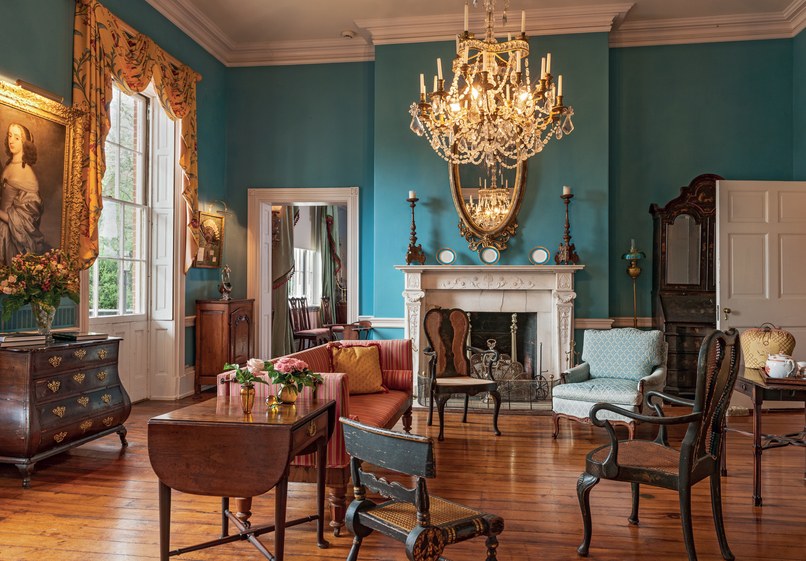
The Gentleman's Farm: Elegant Country House Living

The
Gentleman's Farm: Elegant Country House Living
Written
by Laurie Ossman and Debra A. McClane, Photographed by Walter
Smalling
“This
sumptuous volume features gracious country homes that blend the very
best of vernacular tradition, classical architecture, and high-style
elegance. For four centuries, the ideal of the gentleman’s farm has
inspired Virginians to create extraordinary homes on landscapes of
unparalleled beauty. Often places of retreat, these houses display
the virtues of the very best of American historic and classical
architecture, incorporating harmonious proportion, elegant interiors,
and thoughtful design in traditional styles. Each one in its way a
model of taste and beauty, the houses of The Gentleman’s Farm are
an expression of an American ideal of domestic happiness, the very
picture of home, which has served to influence the style of
residential building across the country. The houses featured,
including a centuries-old home for a president as well as recently
built residences, present a stylish, traditional aesthetic, hallmarks
of which include warm, wood-paneled libraries, plaster walls hung
with paintings of horse riding scenes, classical motifs, lovingly
wrought architectural detail, screened porches, large windows that
frame inspiring vistas of the country landscape—all those things
that say home to the country and suburban gentleman and gentlewoman”
Laurie
Ossman is director of museum affairs at the Preservation Society of
Newport County, Newport, Rhode Island, author of Great Houses of the
South, and coauthor of Carrère & Hastings: The Masterworks.
Debra
A. McClane is an architectural historian and preservationist and the
author of Botetourt County, Virginia, Revisited.
Walter
Smalling is a widely published architectural photographer whose books
include Uncommon Vernacular: The Early Houses of Jefferson County,
West Virginia, 1735–1835.




Thursday, 22 December 2016
The Lisbon Connection encore / Diniz & Cruz

During my last visit
in Lisbon, the city where I was born, I took the opportunity to visit
Diniz & Cruz http://www.dohomem.pt/dinizcruz/eng/index.htm a top Factory and Creation Platform, which combines
European Standards with Portuguese “gentillesse” and “savoir
faire”.
They have important
international customers and they also create and produce for each
season, their own collections very well balanced between tradition of
craftmanship , technological development , great quality of materials
and good taste with a dashing touch.
I was very well
received with uncomparable Portuguese hospitality.
I had in the back of my mind
the prototype / three piece green tweed suit, used in the making of the
promotion film “The Lisbon Connection” …
After a very useful
and pleasant day chatting and visiting the important production line
and seeing lots of beautiful men's cloths, I left.
Then, when i was
already standing at the bus stop, I was really suprised with the
unique, warm and “gentile “ Portuguese touch . They had found the
unique suit and a car appeared to take me back to my desired piece.
To send them and
you all a
“Christmas card” with the best wishes for the New Year I asked
Michael Floor http://michaelfloor.com/
to take some photographs of me wearing it, at Tommy Page Vintage
Menswear, Amsterdam https://www.tommypage.nl/
Feliz Natal e Bom
Ano Novo !
JEEVES / António
Sérgio Rosa de Carvalho


Tuesday, 20 December 2016
The Mini- Aristocrat / Wolseley Hornet and the Riley Elf. / VIDEO: 1969 Wolseley Hornet - Waimak Classic Cars - New Zealand




The Wolseley Hornet built at Longbridge was a revival of a previous name from the 1930’s Wolseley Hornet. This was applied to this special version of the Mini, in a similar manner to the Riley Elf, featuring a longer tail and enlarged boot, but with the appropriate Wolseley grille and better-equipped interior.
Initially the Wolseley Hornet had rubber-cone suspension along with the standard 848cc engine as with the mini, but with improved interior and more sound-deadening material than the standard Mini.
In 1963 the Mk II appeared with a larger 998cc engine increasing the power to 38 bhp, top speed to 77 mph and 0-60 in 24.1 seconds. Fuel consumption improved slightly to 35 mpg. Shortly after the Mk II launched Hydrolastic suspension was introduced in 1964.
The Mk III appeared in 1966, a notable change being the sliding windows upgraded to wind-up windows, and face level ventilation added to the fascia.
1969 saw the end of the long-tail derivative of the Mini for both the Wolseley Hornet and the Riley Elf.


Monday, 19 December 2016
Zsa Zsa Gabor dies, aged 99 / VIDEO: The Gabors-Zsa Zsa,Eva,Magda,Jolie 2000 A&E Biography
Legendary Hollywood actress Zsa Zsa Gabor dies, aged 99
Ruth Sherlock,
washington
19 DECEMBER 2016 •
5:52AM
Zsa Zsa Gabor, the
actress and iconic Beverley Hills socialite has died at 99-years of
age of a heart attack at her Los Angeles home, her husband said.
"We tried
everything, but her heart just stopped and that was it," he
said. "Even the ambulance tried very hard to get her back, but
there was no way," husband Frederic von Anhalt told The
Associated Press.
Though appearing in
some 70-movies, the Hungarian born rose to fame in greater part on
her outlandish personality, extravagant lifestyle and extraordinary
series of nine marriages.
“Every age has its
Madame Pompadour, its Lady Hamilton, its Queen of Sheba, it’s
Cleopatra," George Sanders, the Oscar-winning actor and one of
Gabor's husbands wrote his 1992 autobiography.
"I wouldn’t
be surprised if history singles out Zsa Zsa as its 20th century
prototype of this exclusive coterie".
Emigrating to the US
with her mother and two sisters Magda and Eva, both celebrated
beauties, at the time of the outbreak of World War Two, she quickly
build a career before the television cameras.
Her more serious
acting credits include the 1952 film Moulin Rouge, Lovely to Look At
and We’re Not Married. In 1958, appeared in Touch of Evil as well
as the campy oddity Queen of Outer Space.
But thereafter she
appeared on the big screen only rarely, appearing in such ditzy
showreels as Won Ton Ton: The Dog Who Saved Hollywood. She did
cameos for Nightmare on Elm Street 3 and A Very Brady Sequel.
Always clad in
diamonds, and furs, the former Miss Hungary took her first husband at
the age of 20, and wed for the last time when she was 69-years old.
Exuding a blond diva
'sex bomb' swagger, Gabor parlayed the stories of her dramatic love
life into capital for infamy.
I
am a marvellous housekeeper. Every time I leave a man, I keep his
house
Zsa Zsa Gabor
Writing a book
called "How to Catch a Man", she became known for her witty
quips about her marriage.
She once stated:
"Men have always liked me and I have always liked men. But I
like a mannish man, a man who knows how to talk to and treat a woman
– not just a man with muscles.
A darling of live
television entertainment, when she was once asked about her
housekeeping, she retorted: “I am a marvellous housekeeper. Every
time I leave a man, I keep his house.”
She became a darling
of live television entertainment, and when she was once asked about
her housekeeping, she retorted: “I am a marvelous housekeeper.
Every time I leave a man, I keep his house.”
She had a penchant
for calling everyone “darling.” “I don’t remember anybody’s
name,” she once said. “How do you think the ‘dahling’ thing
got started?
Former spouses
included Conrad Hilton, the founder of the Hilton Hotels chain.
After divorcing Gabor, Mr Sanders, the Oscar winning actor, later
married her sister Magda.
Her extravagance got
her into trouble on occasion and in 1989, she was convicted of
slapping a Beverly Hills policeman and sentenced to 72 hours in jail
and perform community service. In 2002, she was involved in a serious
car accident on Sunset Boulevard as the passenger in a car driven by
her hairdresser.
During more recent
years, often played herself in ironic roles. She appeared in one of
David Letterman’s Late Night shows. Accompanying the host to
suburban New Jersey, they appeared on doorsteps with Gabor asking
the stunned housewives if she could come in and take a look at the
shoes in their closets.
She even parlayed
her jail term into maintaining a spot in the public eye, appearing in
the main title sequence of The Naked Gun 2.
Ed Lozzi, a
publicist for Gabor, first announced that Gabor passed away.
Gabor fell out of
bed in 2010 and underwent hip-replacement surgery this summer at in
Los Angeles.
Her right leg was
amputated above the knee in 2011 to prevent the spread of gangrene,
part of a long run of health troubles glamour girl has had since
breaking her left hip in a fall.
Photos by The Guardian
https://www.theguardian.com/film/gallery/2016/dec/19/zsa-zsa-gabor-a-life-in-pictures


https://www.theguardian.com/film/gallery/2016/dec/19/zsa-zsa-gabor-a-life-in-pictures
Subscribe to:
Comments (Atom)


