
.png)

"The war at Piddington"
-
*"The war at Piddington"* (often referred to in the media as the "war *for*
Piddington") is a highly publicized political conflict surrounding the *Lab...
Thursday, 12 July 2012
Wednesday, 11 July 2012
Ballgowns: British Glamour Since 1950 . V&A Museum.

Ballgowns: British Glamour Since 1950 – review
V&A, London
Rachel Cooke
The Observer, Sunday 20 May 2012
The V&A's new show, Ballgowns: British Glamour Since 1950, an exhibition that also marks the reopening of its much-loved fashion galleries, is not for everyone. On my way in, I heard a man all but beg his wife not to drag him round it ("I thought this was a cultural expedition, not another bloody shopping trip!" he might have told her, had he not been practically mute with despair). Once inside, I couldn't help but notice that there was not a male of the species anywhere to be seen.
But if you like a properly made frock and hanker, even just a little, for the days when a big night out meant long, silk gloves and a Dubonnet rather than T-shirts and cheap vodka, it will have you swooning with delight. Yes, you will feel unpleasantly covetous. Yes, you will wonder if you shouldn't, after all, lose a stone, or six. But these things will pass. Fifteen minutes in and your absorption in the way Norman Hartnell used corsetry or Zandra Rhodes quilting will be total. The world will shrink to the dimensions of a bodice or a buttonhole, a collar or a cuff.
Gallery 40 was originally a spectacular domed court, with architectural columns and ornate mosaic floors. The V&A's refurbishment has uncovered the mosaics and a grand staircase now sweeps the visitor up to a mezzanine gallery beneath the dome. The result is elegant and spacious; the mezzanine, circular and lofty, brings a couturier's showroom instantly to mind. But the gallery's lighting still feels excessively muted to me. Downstairs, I struggled to read the labels and if a dress is placed anywhere other than right at the front of a display case, it's impossible to see the craftsmanship involved.
Strange, too, that while dresses and suits from the permanent collection are shown alongside handbags and jewellery, hats and shoes, the ballgowns, temporarily visiting, have only outsize cardboard cutouts of accessories for company (though they're labelled as if they were real, bizarrely). Were the curators worried a brooch or stole would steal the gowns' thunder? Or is this a nod in the direction of the new austerity?
The finest of the dresses – the most beautiful and the best made – are also the oldest. I had a moment of pure buyer's lust (so bad my fingers tingled) in front of a citrine evening coat with voluminous fur cuffs by Norman Hartnell, from 1965. Hartnell, who designed both the Queen's wedding dress and her coronation gown, is thought of now as rather fusty, a lickspittle rather than an innovator. But at his best, his designs had an authentic drama: no wonder Edith Evans was a customer.
And perhaps Hartnell, the son of a Streatham publican, knew precisely what he was doing when it came to establishment commissions. A state evening dress designed for the Queen Mother in 1953 – a crinoline that recalls similar gowns in the paintings of Franz Winterhalter, it has a V-shaped neckline, floaty cap sleeves and a motif of tiny flowers – tells you a great deal about the woman who wore it. At once grand and girlish, it speaks both of entitlement and self-delusion; for a pretty dress, it's magnificently repulsive.
Hartnell isn't the only star in the downstairs gallery. Bellville Sassoon, the debs' favourite house, features strongly: there is a beautiful dress made for Princess Anne in 1968, comprising a buttercup skirt and an extravagant embroidered bodice in shades of brown and orange (a famous recycler of clothes, I do wonder why HRH got rid of this one); and a truly adorable gown of pale pink Swiss organza from the designers' Infanta collection, its pattern of tear-drop shaped embroidery and crystal drop beads offset by its superbly neat lines.
Sybil Connolly's 1966 leaf-green pleated skirt, embroidered white blouse and pink belt is a cool reinvention of the evening dress: daringly, it is made of cambric and linen. Connolly, who was Irish, isn't much remembered now, but Jackie Kennedy was among her clients. Sadly, though, this isn't a detail you'll find anywhere in the gallery. Background information is, it must be said, infuriatingly thin on the ground and the pathetic catalogue, which longs mostly to be Vogue, no help at all. Sweeping past Catherine Walker's "Elvis" dress for Diana, Princess of Wales – a novelty number I've always hated – and the hideous 80s creations of Victor Edelstein ("Let's just stick a giant bow... right here!"), we go upstairs to the contemporary gowns, to dresses worn on red carpets rather than in stately halls, and it's strangely anticlimactic.
For one thing, most of these have been lent by their designers; they were borrowed by the actresses and models who first wore them, rather than bought and loved and kept carefully in tissue and mothballs for a lucky daughter or niece. This makes them, in my eyes, so much less interesting. Their value is mostly monetary. They lack emotional history. Aesthetics have all too often been replaced by the need to draw a cheap kind of attention (though Giles Deacon's tumbling black silk dress from 2007 – it was inspired, he says, by a visit to a car wash – is a deft tribute to Fortuny by way of Issey Miyake).


For another – and this is much worse – they seem not truly to be of service to the bodies that inhabit them, however briefly. The curators note that Roland Mouret has spoken "eloquently" of the pressures of the red carpet, of the fact that a dress must withstand the pressure of flashbulbs from 360 degrees. And it's true that here in the gallery, on a mannequin, his peach asymmetric silk dress from 2010 is perfect from every angle, a feat of precision engineering. Only then you look at the photograph of Maggie Gyllenhaal in the same dress at the Golden Globes and it suits her not a bit. Would it suit anyone? I doubt it. The finest dresses are forgiving. Their artiface encompasses great kindness. But this one is unmerciful; it disdains every inconvenient body part. It seems – what a sign of the times! – hardly to have been designed for a woman at all.


Tuesday, 10 July 2012
Tuesday, 3 July 2012
Monday, 2 July 2012
Le Petit Trianon à Versailles.The essence of Frenchness à La Reine.

It was designed by Ange-Jacques Gabriel by the order of Louis XV for his long-term mistress, Madame de Pompadour, and was constructed between 1762 and 1768. But Madame de Pompadour died four years before its completion, and it was subsequently occupied by her successor, Madame du Barry. Upon his accession to the throne in 1774, the 20-year-old Louis XVI gave the château and its surrounding park to his 19-year-old Queen Marie Antoinette for her exclusive use and enjoyment. Marie longed to escape Louis and his court, and he gave her just the place.
The château of the Petit Trianon is a celebrated example of the transition from the Rococo style of the earlier part of the 18th century, to the more sober and refined, Neoclassical style of the 1760s and onward. Essentially an exercise on a cube, the Petit Trianon attracts interest by virtue of its four facades, each thoughtfully designed according to that part of the estate it would face. The Corinthian order predominates, with two detached and two semi-detached pillars on the side of the formal French garden, and pilasters facing both the courtyard and the area once occupied by Louis XV's greenhouses. Overlooking the former botanical garden of the king, the remaining facade was left bare. The subtle use of steps compensates for the differences in level of the château's inclined location.
Marie Antoinette would come to the Petit Trianon not only to escape the formality of court life, but also to shake off the burden of her royal responsibilities. At Versailles, she was under considerable pressure and judgement from both her family and the court, and the Petit Trianon was her place of ease and leisure where she could rest from those trials. Since all was "de par la Reine" (by order of the Queen), none were permitted to enter the property without the Queen's express permission (not even, it was said, Louis XVI). Such exclusivity alienated the court nobility, which she did very willingly, since only the queen's "inner circle" (including the Princess de Lamballe, and Gabrielle de Polastron, duchesse de Polignac) were invited.
A house of intimacy and of pleasure, the building was designed to require as little interaction between guests and servants as possible. To that end, the table in the salles à manger was conceived to be mobile, mechanically lowered and raised through the floorboards so that the servants below could set places sight unseen. The tables were never built, but the delineation for the mechanical apparatus can still be seen from the foundation.
Within the queen's apartment, one discerns Marie Antoinette's incessant need for privacy: the decor of her boudoir displays an inventiveness unique to the age, featuring mirrored panels that, by the simple turning of a crank, can be raised or lowered to obscure the windows. Her bedroom, although simple, is also elegant in accord with her general style, provided with furniture from Georges Jacob and Jean Henri Riesener. The wallpaper was painted by Jean-Baptiste Pillement.


.jpg)


Sunday, 1 July 2012
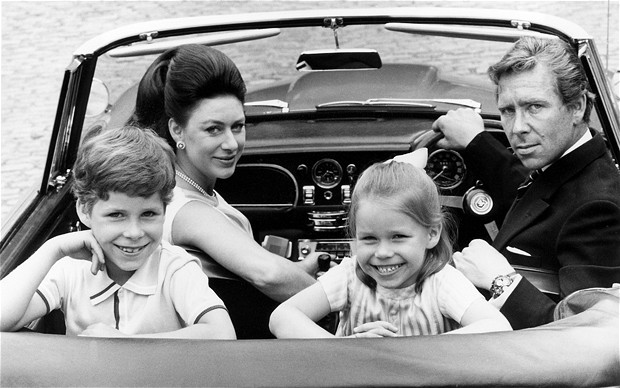
Koto Bolofo photographs the life of Lord Snowdon.

Koto Bolofo photographs the life of Lord Snowdon
The photographer Koto Bolofo has spent two years documenting the life and craft of one of his heroes, Lord Snowdon. He reveals what he learnt from the master portraitist
By Lucy Davies 19 Mar 2012 in The Telegraph
Koto Bolofo fled South Africa aged four, when his father, a teacher, was accused of spreading anti-government propaganda to schoolchildren. Bolofo grew up in England, developed an interest in photography and, entirely self-taught, built a career as a fashion photographer and filmmaker. Now 52, he has devoted the past two years to celebrating the life and craft of Lord Snowdon. ‘We had his book Sittings in the library at school, and it fascinated me,’ Bolofo recalls. The idea for this project came to him in 2009. ‘I thought, this is one of the great English photographers; he’s captured every living icon you can think of. I wanted to show the younger generation how much work goes into being a master photographer.’ Bolofo set about creating a visual document of the life and work of the man behind the public persona.
The two hit it off from the start, and their regular meetings were always surprising. ‘Sometimes he’d just want to have a chat. Once, he sang to me; another time I watched him have his hair cut. I knew I couldn’t push or shove, it had to be at his pace.’
For Bolofo, the lessons he learnt during his time with Snowdon are invaluable. ‘Before, I would take a hundred rolls of film with me to a shoot, now I don’t even finish a single roll and I know I’ve got 10 good shots. He taught me: look first, learn first, shoot last.’



Subscribe to:
Posts (Atom)


.jpeg)


